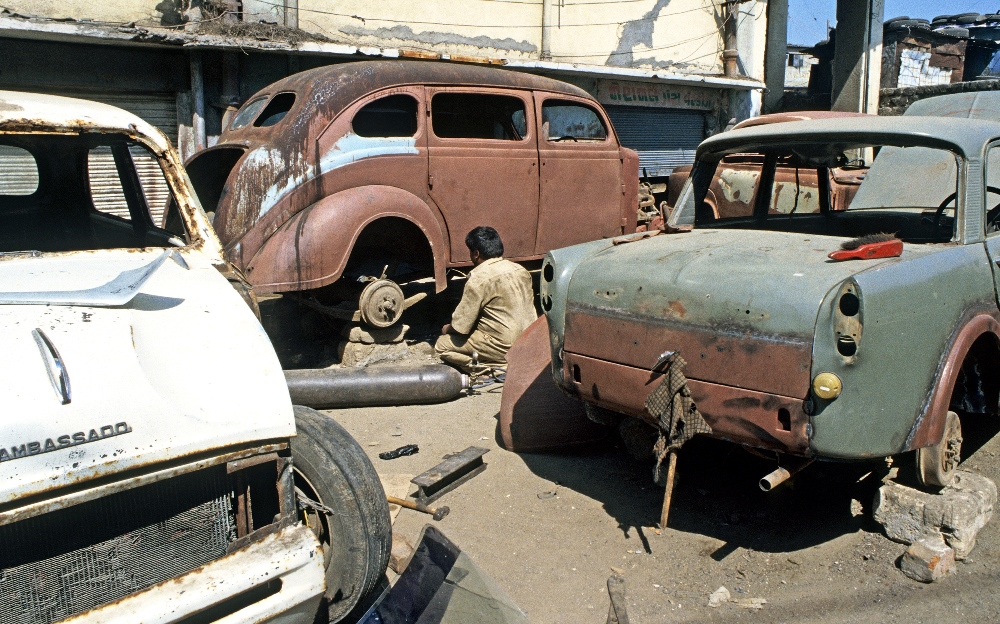
These traditional taxis of India are not just engaged or occupied, but extinct. Sadly, a part of our matchless motoring heritage has been lost forever.

Some time back, when I was on a “Southern Sojourn” and driving through the small town of H.D. Kote, which is known for its paddy, sugarcane, and coconut cultivation, I saw something that pleased me no end. The local taxi stand here was full of well-maintained Hindustan Ambassador’s, at least 10 to 12 of them. On talking to the drivers I learnt that all these Ambassadors are still used as taxis and they continue to be popular with people in this region, despite the fact that there are so many newer makes and models available now.
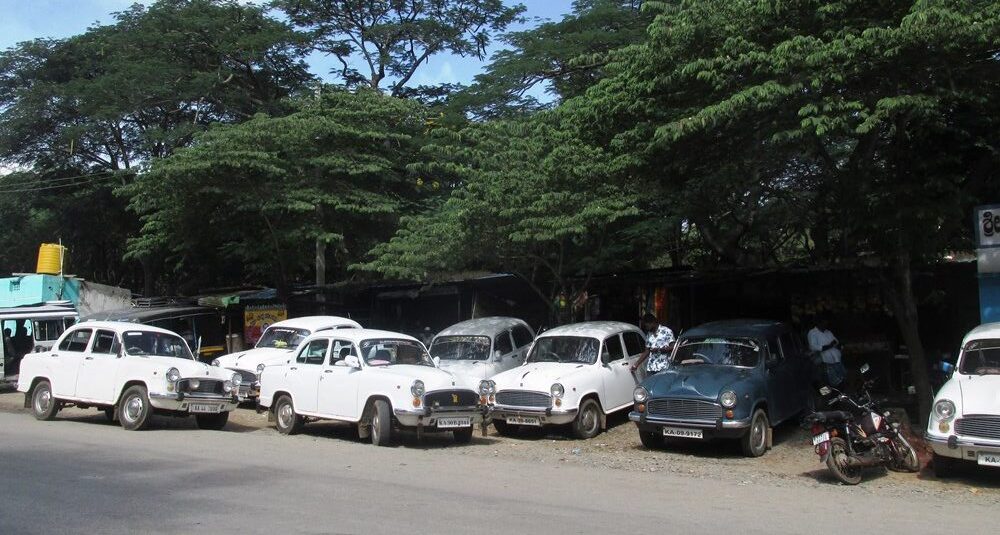
One of the taxi drivers, Mani I think it was, put it very beautifully and said, “Ambassador’s have been used here as taxis for more than 50 years. Even my father drove one. Ours is an agricultural and forested region and we also have many wild elephants residing and moving through it. And even these elephants know the Ambassador and don’t come in its way or block its path like they do at times with some smaller and not so strong looking modern cars! These Ambassador’s are the pride of our region and we make sure that we keep them in top condition. Our local mechanics are also very good and work loyally on these old cars”.
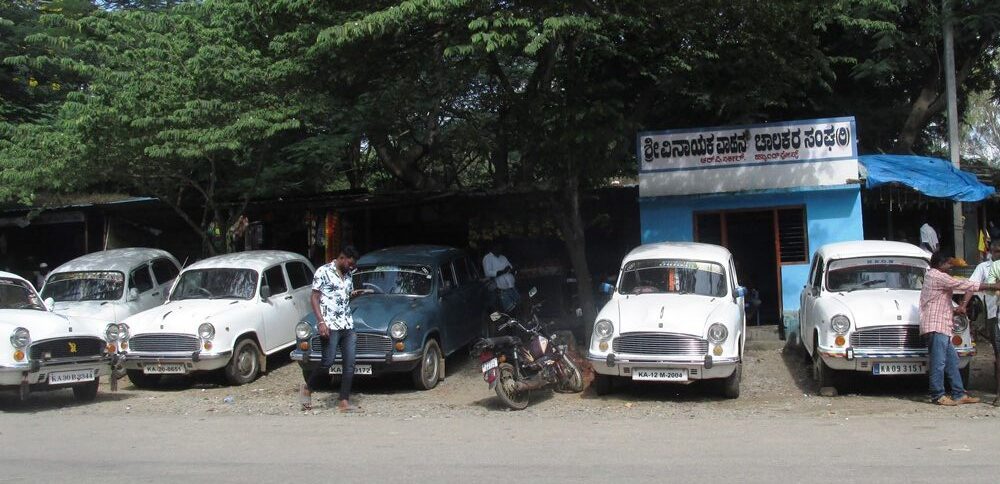
When asked how long he thought the Ambassador taxis would continue, he dejectedly confirmed that they were disappearing fast. Modern day cars were easier and cheaper to maintain and easy finance and loans meant everyone was opting for a shiny new cab. It was only those that had a family connection or emotional attachment with the Ambassador’s, who kept them going. But he did not think this could continue for long. Already only a handful were left.
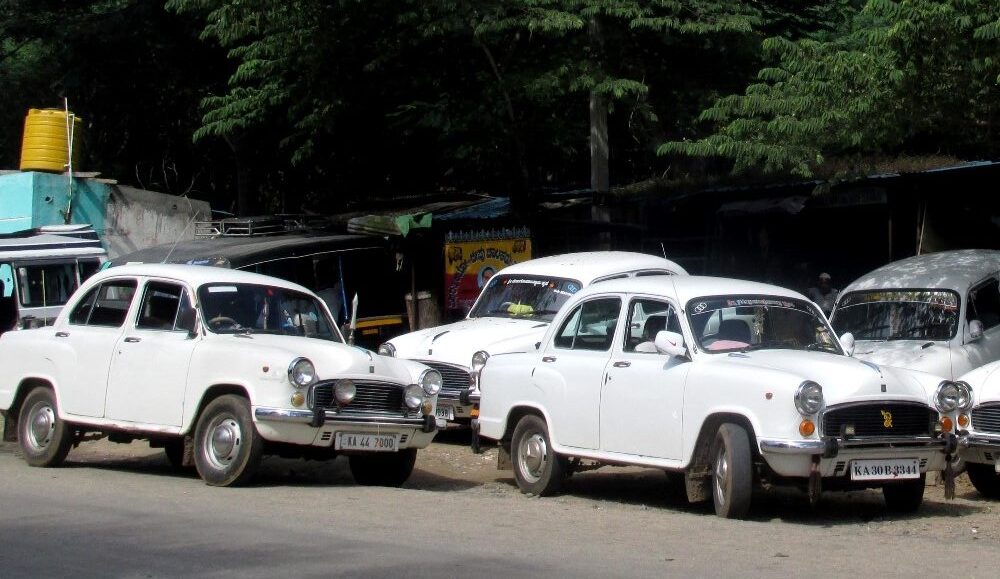
While I was happy to see these Ambassadors still running as taxis, I am also unhappy about the fact that they will soon disappear in what might actually be one of the last strongholds of the Ambassador. There was a time when Delhi and Calcutta (now Kolkata) were also known for Ambassador’s and in our national capital, you not only saw Ambassador Taxis, but almost all the politicians and bureaucrats used white coloured Ambassador’s too. But now Ambassador’s are a rare sight even in Delhi, which was once also their capital.
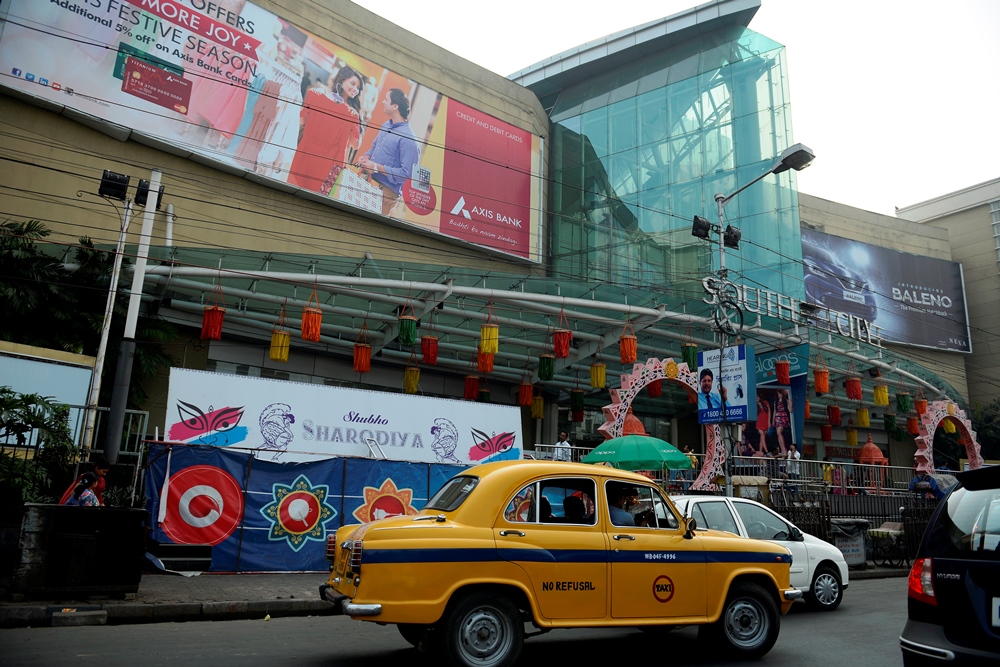
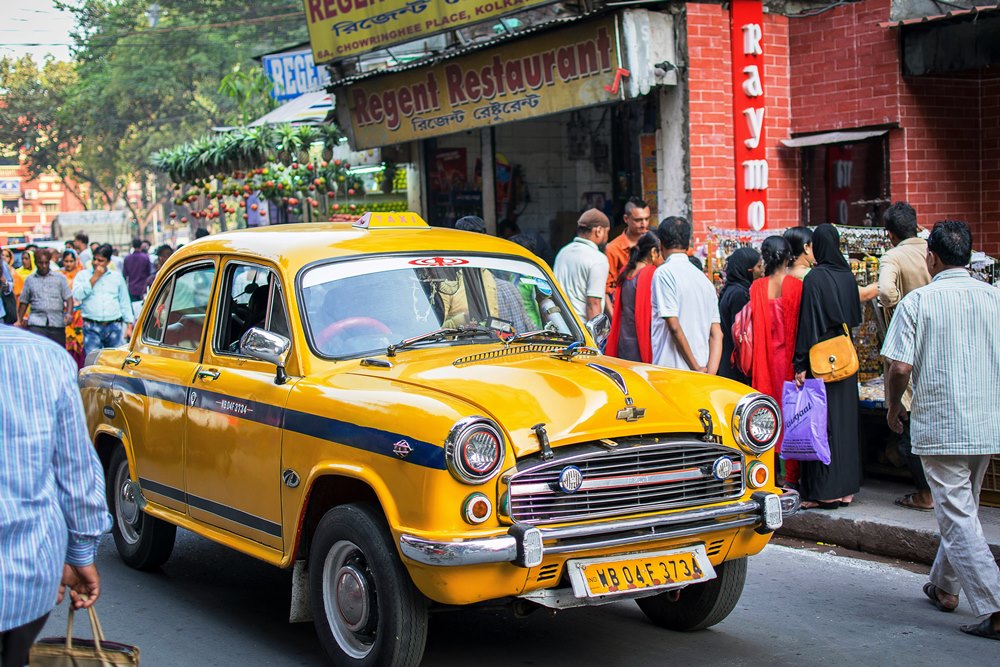
Kolkata fortunately still has some Ambassador Taxis, but if the authorities have their way, in the next couple of years, these too will be gone. And Calcutta, which has for long also been referred to as the “Cultural Capital” of India, will have lost one of its shining symbols – the bright yellow Ambassador Taxi.
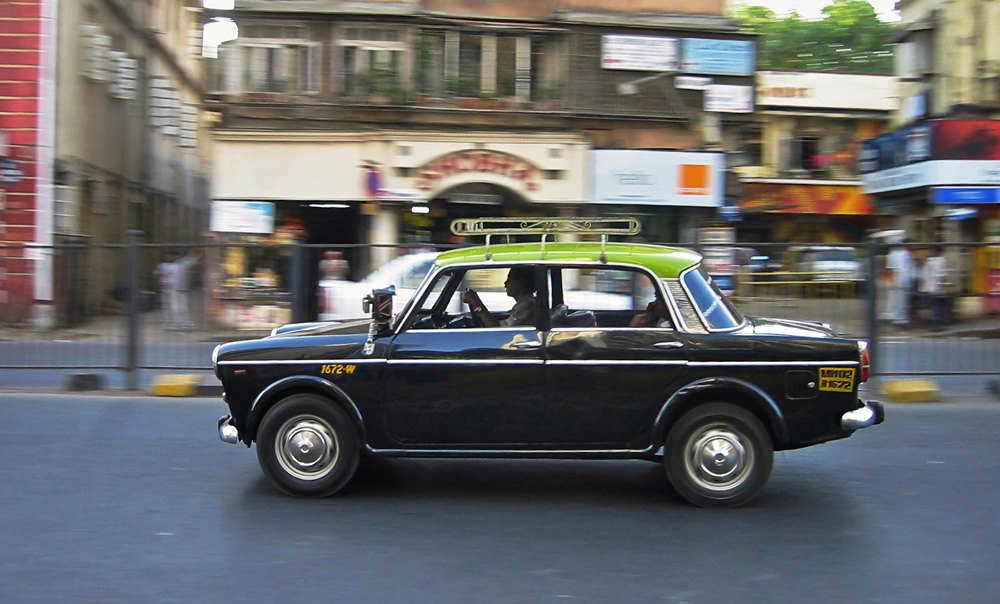
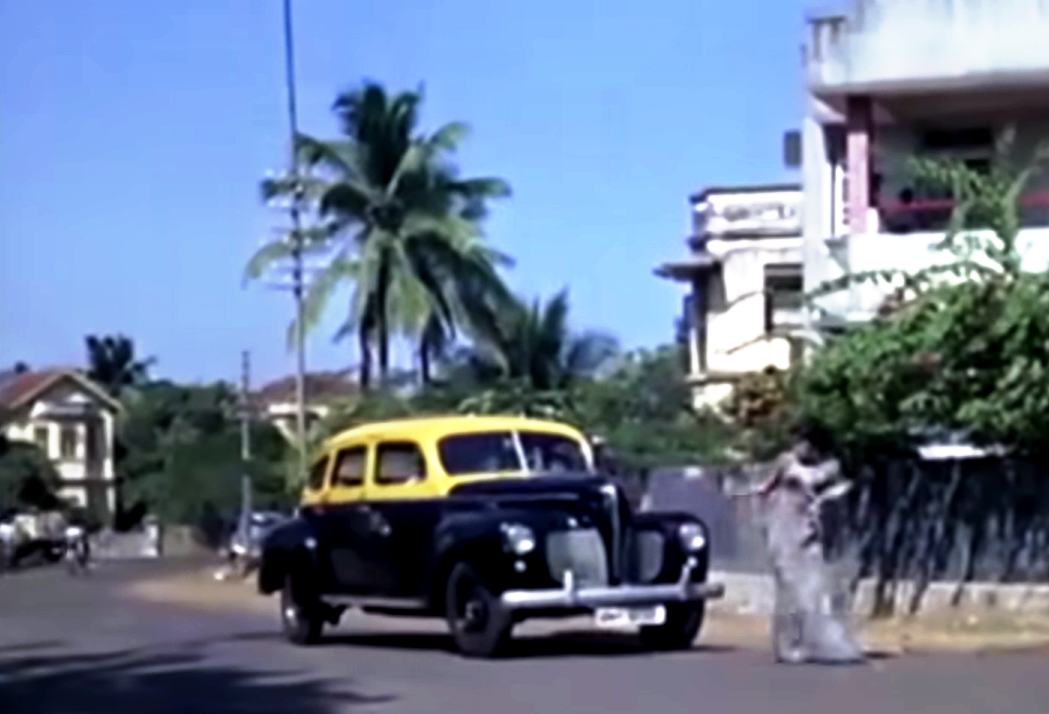
Bombay, now Mumbai, used to also have a similiar icon or symbol, and this was the Fiat or Premier Padmini Taxi, popularly called “kaali peeli”. These Fiat taxis were synonymous with Bombay and an integral part of its cultural identity, and transport history and heritage. But today not one survives! Yes, not one! The government in its wisdom, or foolishness, decided that they were too old and must go. I understand and appreciate that the old has to give way to the new. But all of them? Definitely not. It’s a foolish decision that displays complete disregard for our heritage.
We could have certainly preserved at least a few of them, say 50 or 100, and given them a special “Heritage Taxi” status along with some concessions and support to ensure they remained road worthy and in good condition. If these had been allowed a higher special heritage fare, I am sure some of the owners themselves would have gone all out in making sure that their old taxis were restored in the best manner possible and were in fine fettle, to ferry tourists or enthusiasts.
Yes, obviously these “Heritage Taxis” would not be used for regular transport and nor would they roam the streets looking for passengers and fare. A dedicated booking system for tourists who want to go on a “Nostalgia Drive in a Heritage Taxi” can easily be created. And I can promise you these “Heritage Taxis” would be a super hit, not just with foreign tourists, but also NRIs, auto enthusiasts, and anyone wanting to relive memories of how commuting in classic Fiat cabs used to be in Bombay, India’s best city ever.
Although I am suggesting and advocating this, I know it will not happen. Simply because those who rule us, and those who make the rules, don’t value or appreciate our true heritage and neither do they have the intentions to do what is right for the people, and our cities.
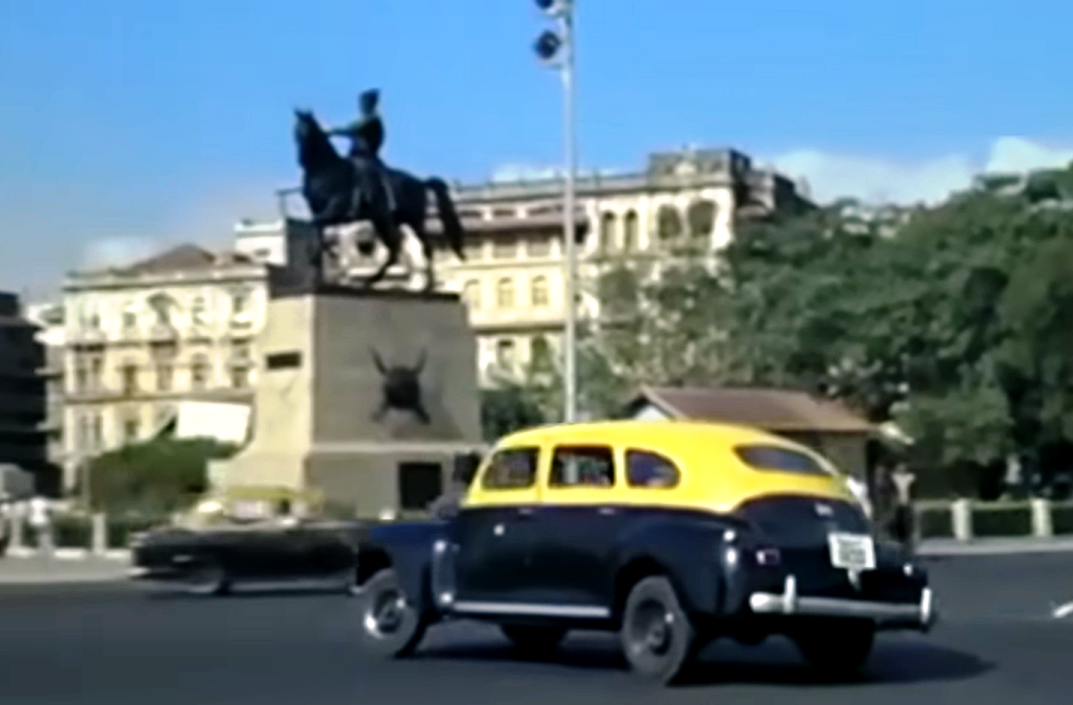
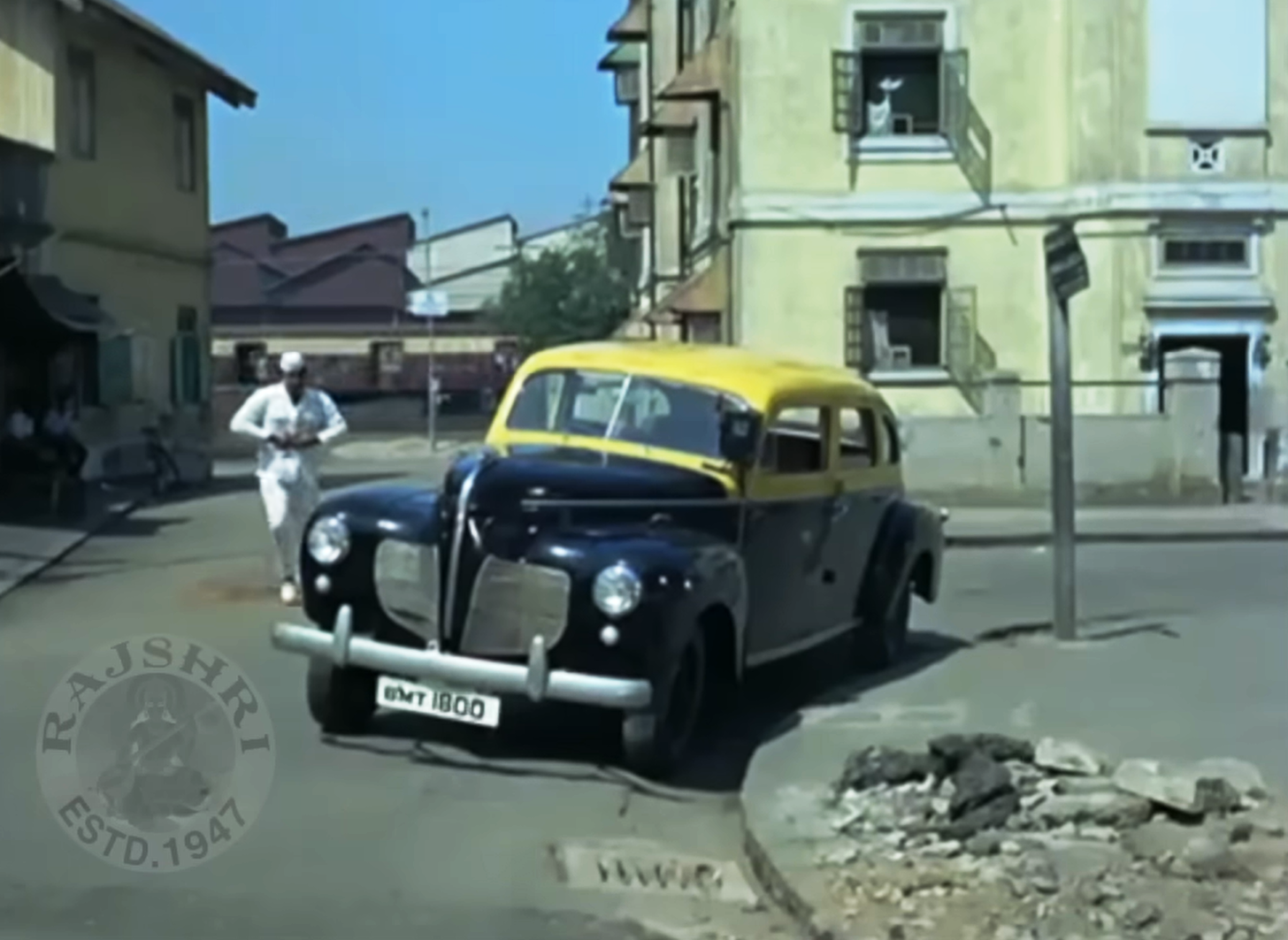
And while we are on the subject, how many know that we once had big American cars plying as taxis not just in Bombay, but also in many of our other cities and towns. Look at the photograph here of the 1940s DeSoto Taxi. This image is from the 1960s Hindi film Sadhu Aur Shaitan, in which Mehmood plays the role of a taxi driver and is seen driving this DeSoto all over Bombay. Yes, once upon a time, Bombay had such massive American cars as taxis.
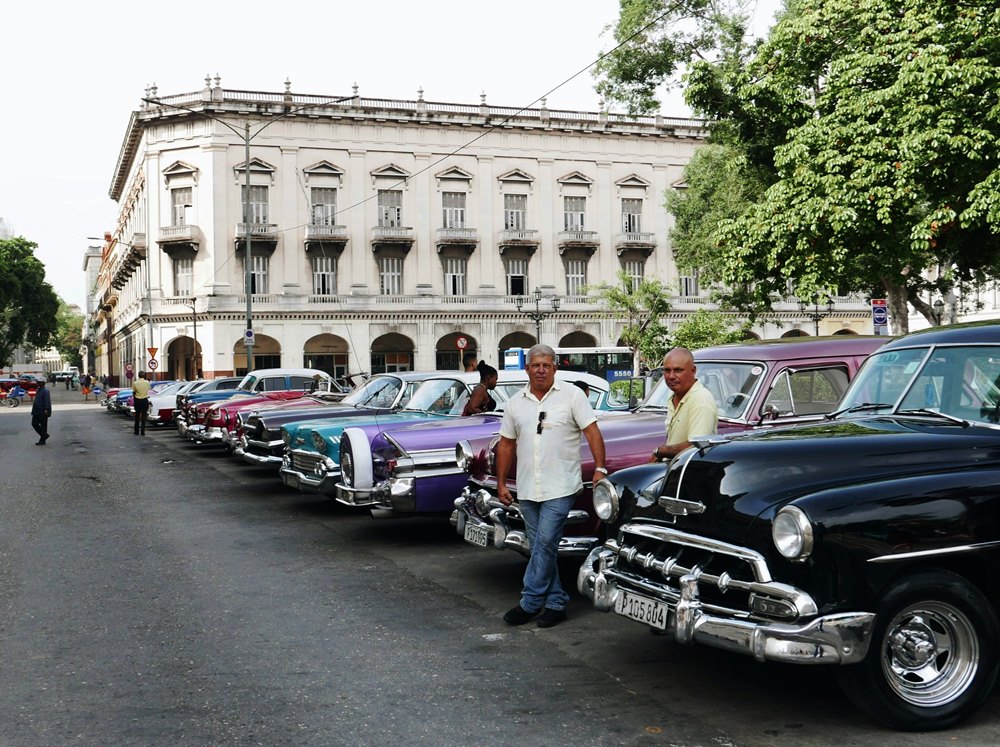
Even today, Cuba’s American classic cars, known as “almendrones,” are a vibrant symbol of Cuban history as these 1940s-50s Chevys, Fords, and Cadillacs, have been ingeniously kept running for decades due to the U.S. embargo of Cuba and restriction on import of cars. And today these classic cars are a hallmark of Cuba, adorning their tourist brochures, etc. And anyone who now visits Cuba wants photos with these American classic cars.
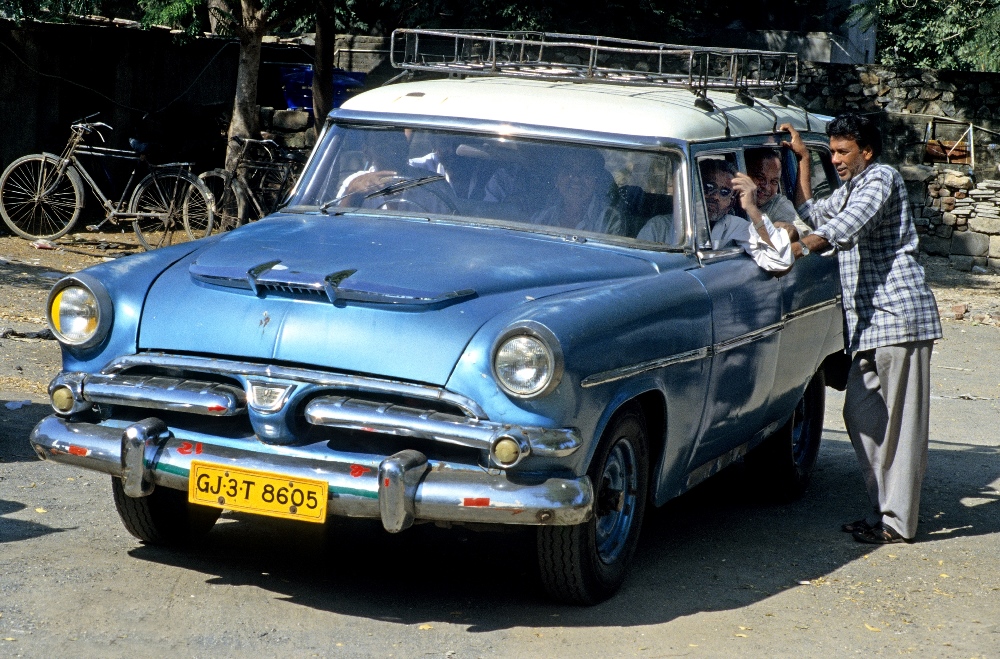
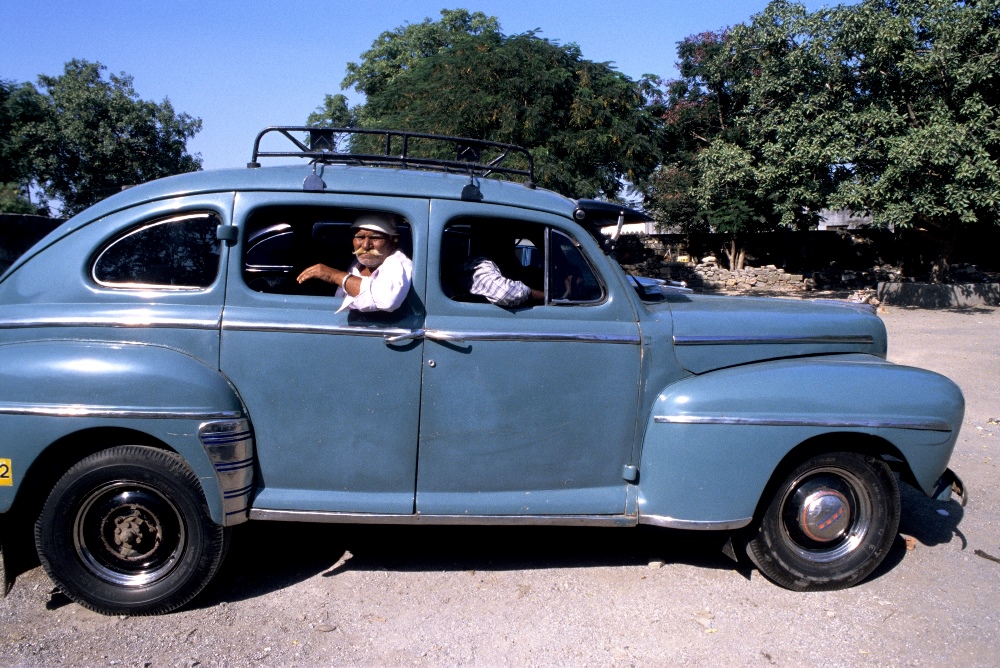
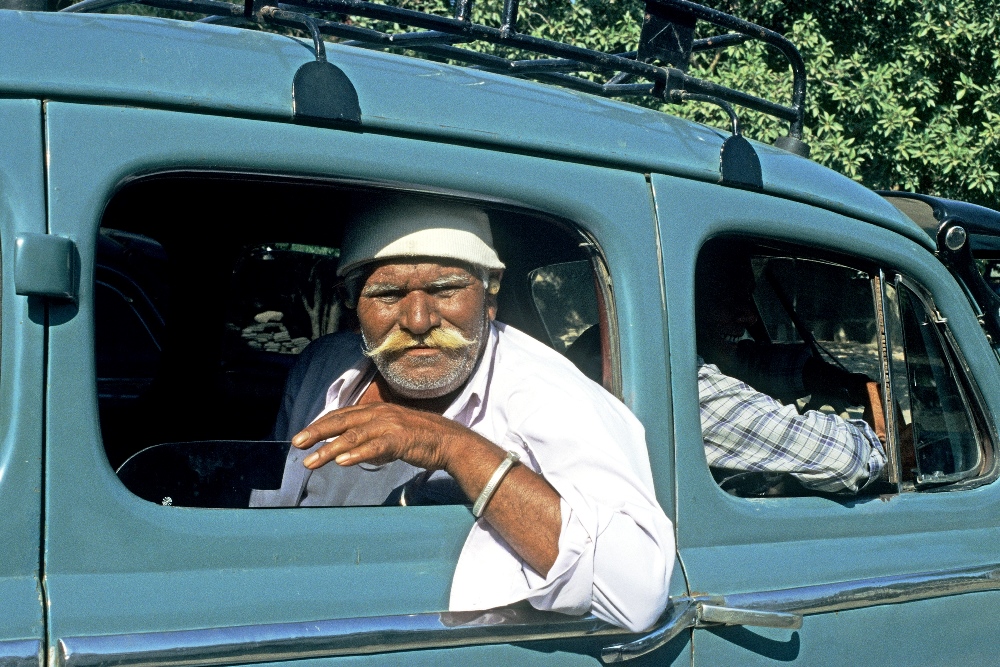
But what did we do with our classic taxis – discard them. And as I mentioned, it was not only Bombay that had large American cars as taxis. Old-timers’ will recollect that until the 1970s you found them in Nashik and even hill-stations like Mahabaleshwar and so on. As a matter of fact, if I am not mistaken, the last citadel for American car model taxis was Gujarat, and I myself have seen them in the interior parts of Saurashtra, where they roamed until just 10 to 15 years back.
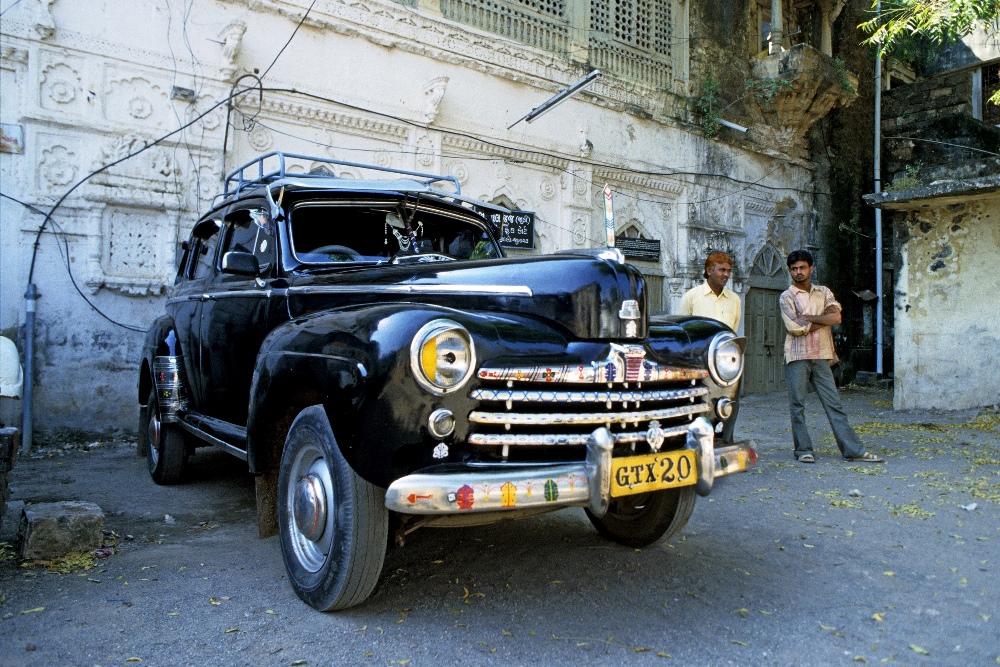
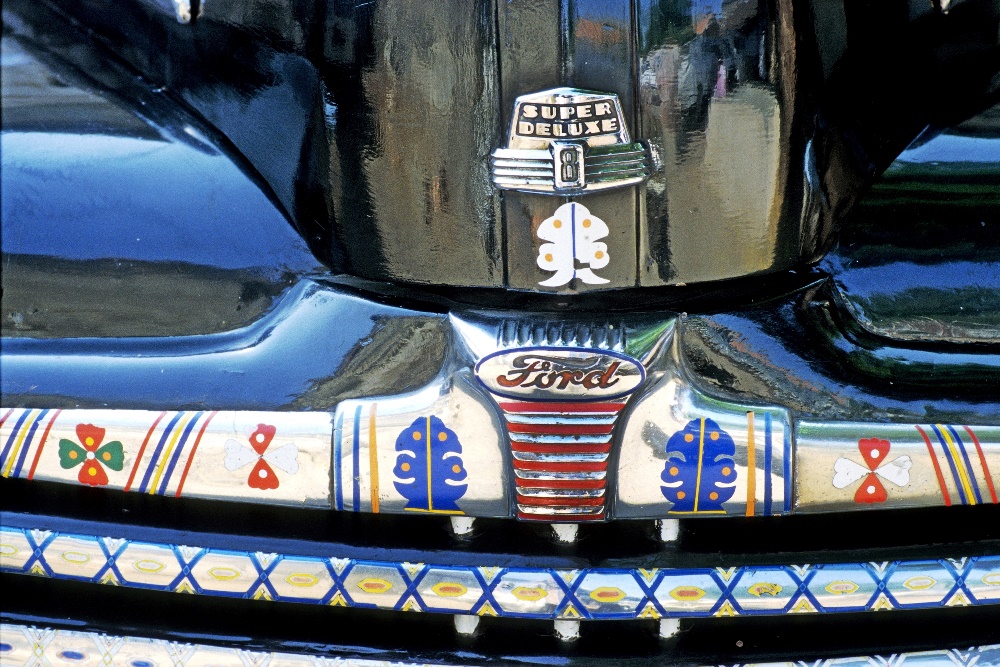
Maharaja Himanshusinh of Gondal, who is an avid car enthusiast with a large and fine collection of classic and modern cars confirms this and says, “We had well over 100 American model taxis in the Saurashtra region. These were cars given away by the erstwhile royal families or merchants of Gujarat. Ford’s were the most popular followed by Dodge and Chevrolet. The Ford’s were also more in number as the royal families did not just buy one, but several of them at a time, because of their rugged front and rear leaf spring suspension, powerful V8 engines and strong bodies and spacious interiors”.
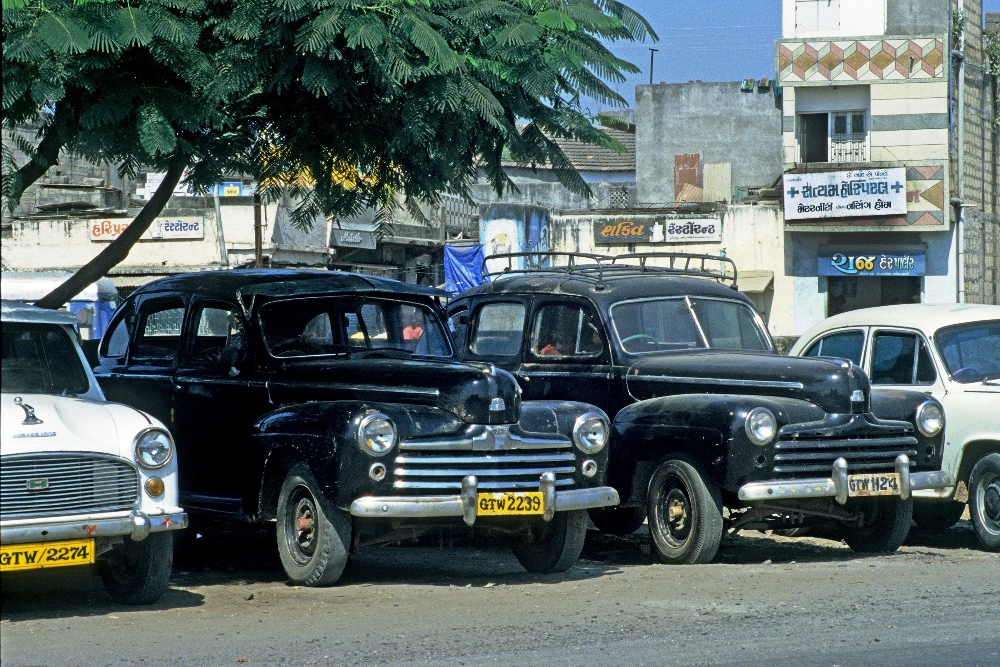
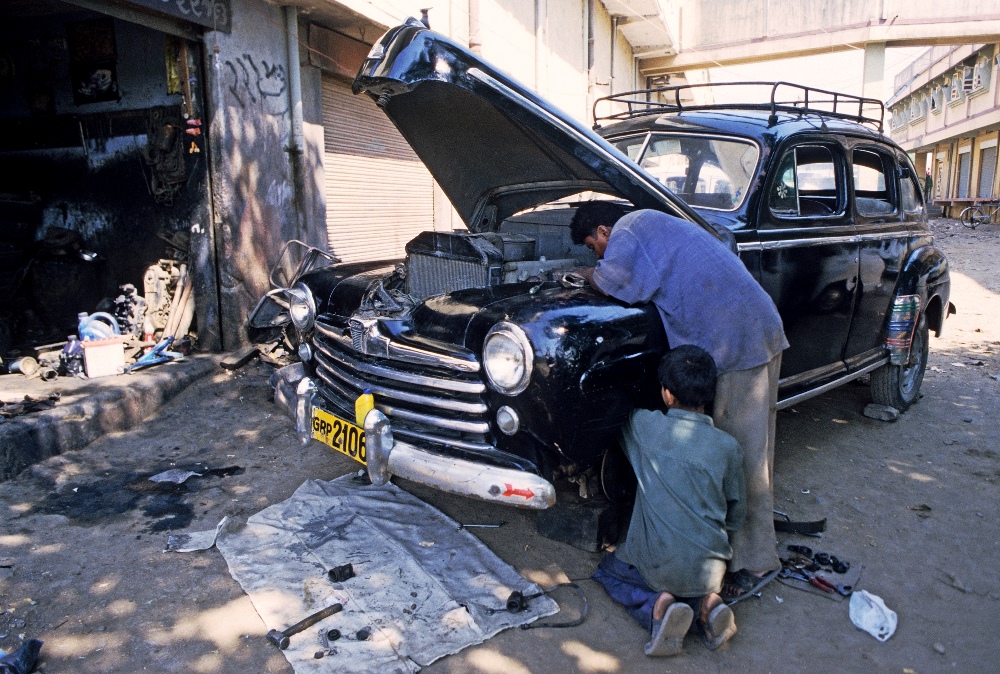
As confirmed by Himanshu, in the 1940s-50s these more affordable American cars were like workhorses and utilized for everyday use by the erstwhile royal families. After India’s independence many families gave away these cars and the townspeople or those from neighbouring regions, were quick to buy them and use them as taxis and for wedding ceremonies, etc. They of course replaced the petrol V8 engines with diesel ones, quite often the popular P4 diesel engine. As time went by, they also put other major components like gearboxes, differentials, seats, etc, from other vehicles like the jeeps, matadors, etc.
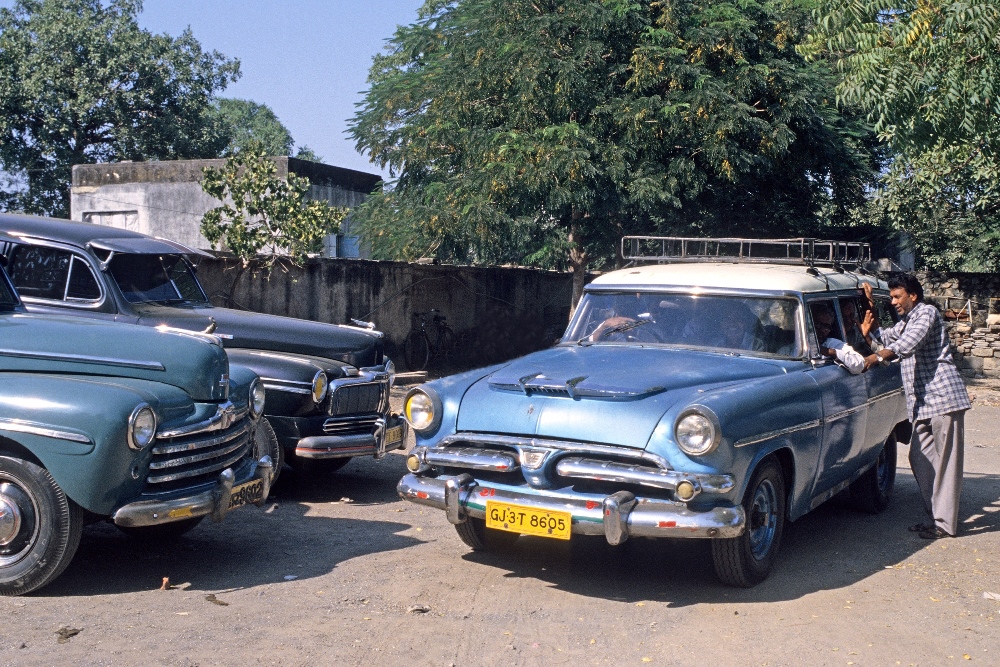
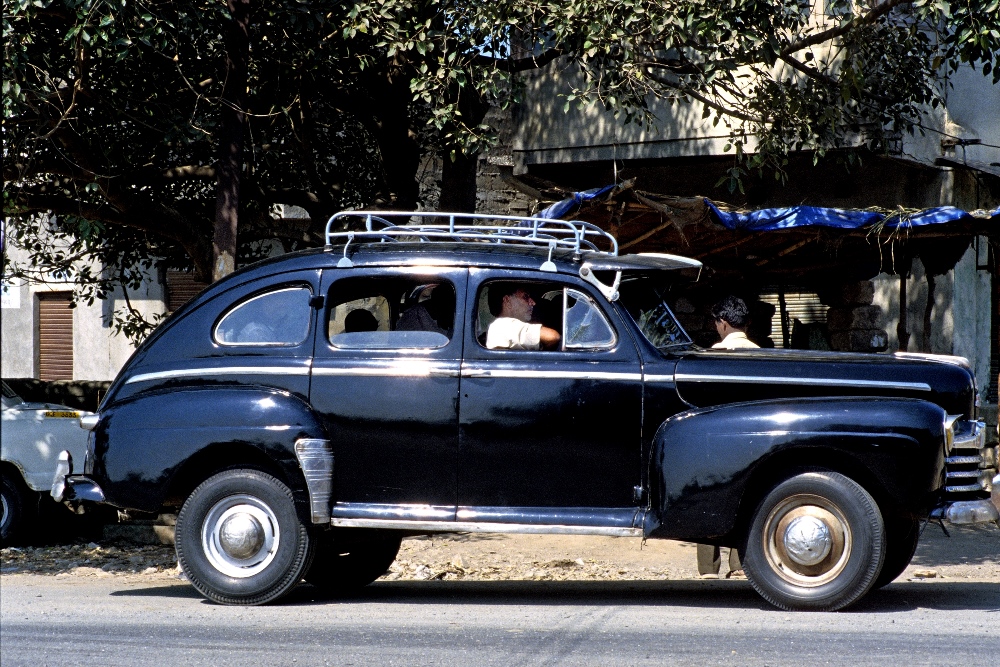
They would raise the suspension even further so their taxis could carry more people and higher loads of luggage than the manufacturers could ever imagine. According to Himanshu, some of these taxis must have easily crossed over a million kilomteres in their lifespans. Now only a few survive and that too mostly in non-running condition. But the irony is that with growing interest in classic cars, the owners of these former taxis now demand several lakhs of rupees if any car collector or enthusiast approaches to buy them.
Given all this, don’t you agree that we have not done justice to our rich legacy of “Classic Taxis” and how wonderful it would have been if we had at least preserved a few and kept them running as tourist attractions. However, while it may be too late to revive the American model taxis, I am sure if our authorities become serious about it, we might just be able to save the Ambassador and Fiat taxis from becoming another lost part of our motoring history and heritage. Taxi – Sahib Hum Extinct Hai.
Bob Rupani is a born car lover and avid automobile enthusiast who has spent some of the best times of his life behind the steering wheel.