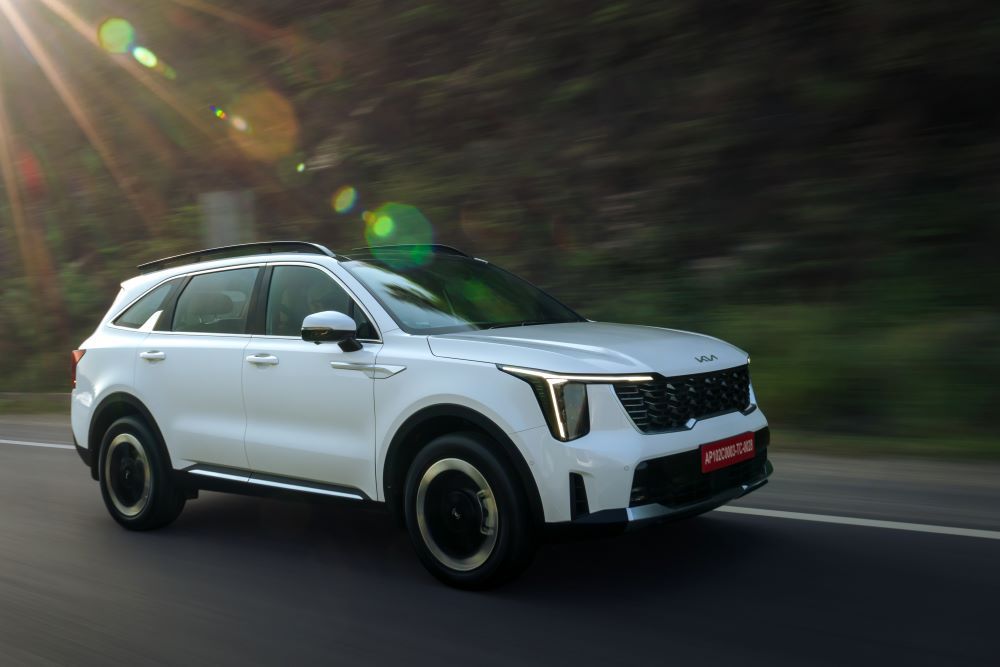
This new hybrid SUV from Kia, seamlessly switches between petrol and battery power.

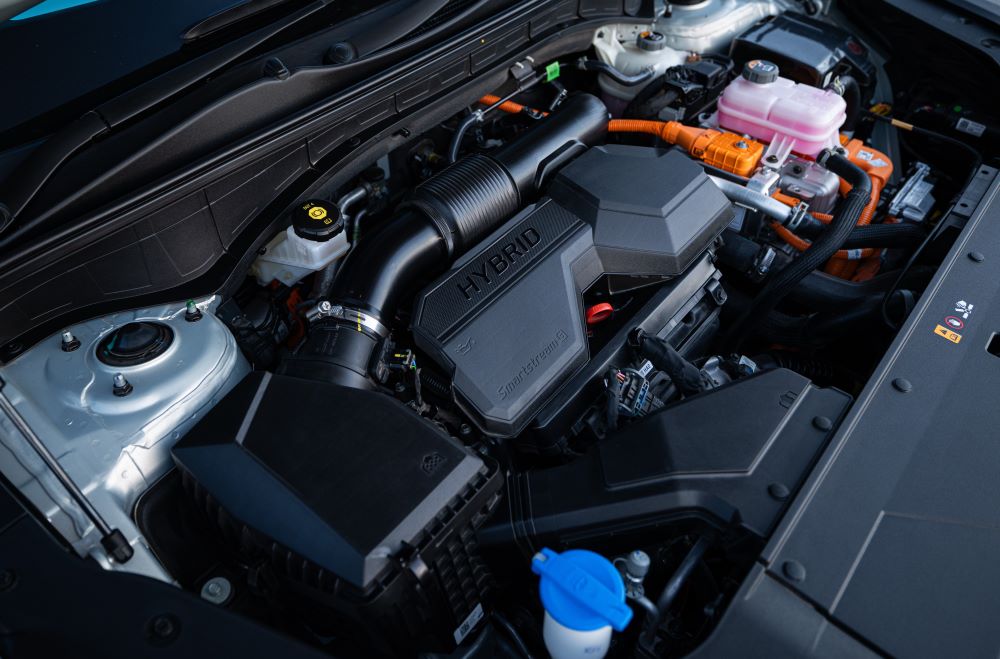
While the introduction of hybrids in the Indian automobile market has been a bit slow so far, it is now beginning to speed up and Kia has also just launched its new Sorento SUV, with both, hybrid and diesel powertrains. And recently when I got the opportunity to drive the Kia Sorento in and around Udaipur, I chose to get behind the wheel of the hybrid, simply because its Kia’s first hybrid in India.
One of the challenges in hybrids is how smoothly (or jerkily) they make the transition from battery, to petrol power. At low speeds and in city traffic, the electric motor and its battery drives the car, eliminating emissions and also using zero fuel. Onboard computers constantly monitor things like battery charge, throttle pressure, speed, terrain, and so on, and the petrol engine gets automatically engaged when you push the pedal firmly and call on more power to accelerate rapidly, or to overtake, or climb hills, etc. If you are motoring on highways at reasonably high speeds, then also the petrol engine gets deployed to drive the car.
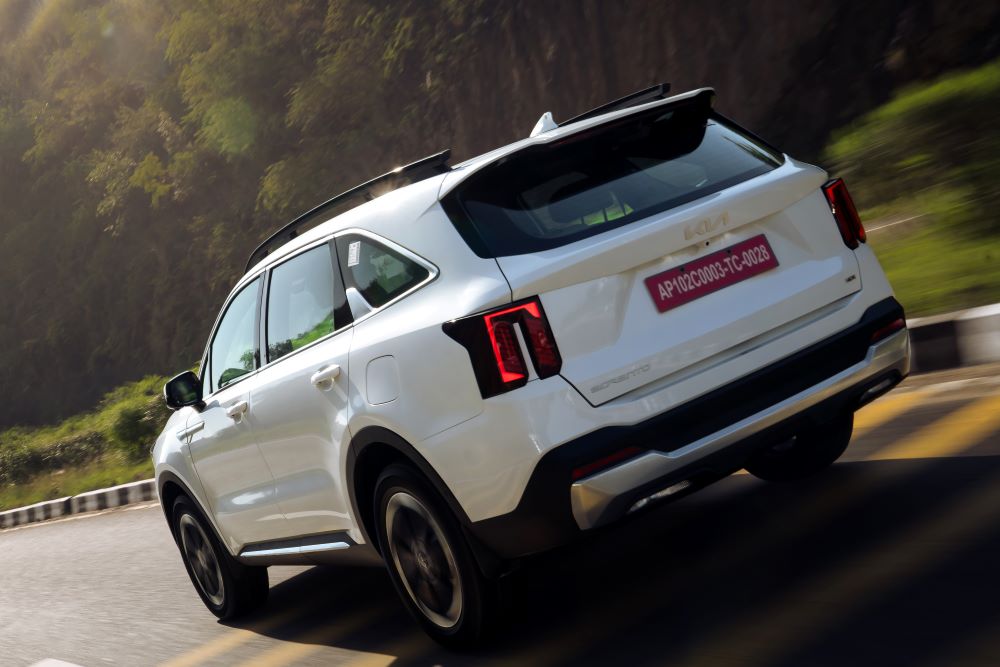
So, if you are a fussy and demanding driver like me, you want this shift in power from one source to the other to be undetectable. Let me tell you that in several hybrids I have driven (including some from premium car makers), this blending of electric and petrol propulsion can be quite jarring and disjointed. But to its credit, the Kia Sorento handles this dual-source integration exceptionally well. In fact, after driving it for just a few minutes and experiencing how effortlessly and almost invisibly it shifts between the 1.49 kWh battery and 1.6 litre petrol engine, I developed an immediate liking for this new SUV from Kia.
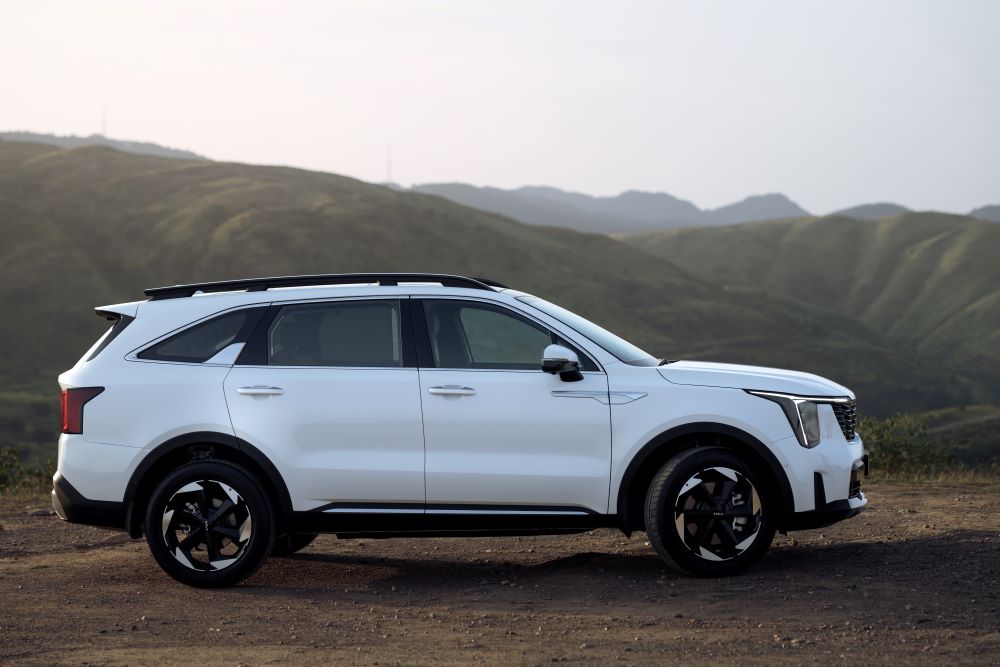
Couple of other things. Normally petrol engines fitted in hybrids don’t come with turbos because the electric motor does the job of providing instant low-end power. But in a large SUV like the Sorento that weighs approximately two tons, when the engine would come into play, a 1.6 litre naturally aspirated one could have run out of breath, and therefore Kia have installed their turbocharged hybrid (T-GDI) to ensure there is enough power. And by limiting its cubic capacity to 1.6 liters, they have also ensured good fuel efficiency. On its own, this 1.6 litre engine produces a respectable 178 bhp and 265 Nm of torque. And its battery partner delivers 64 bhp and 264 Nm, and together they are an adequately powerful proposition.
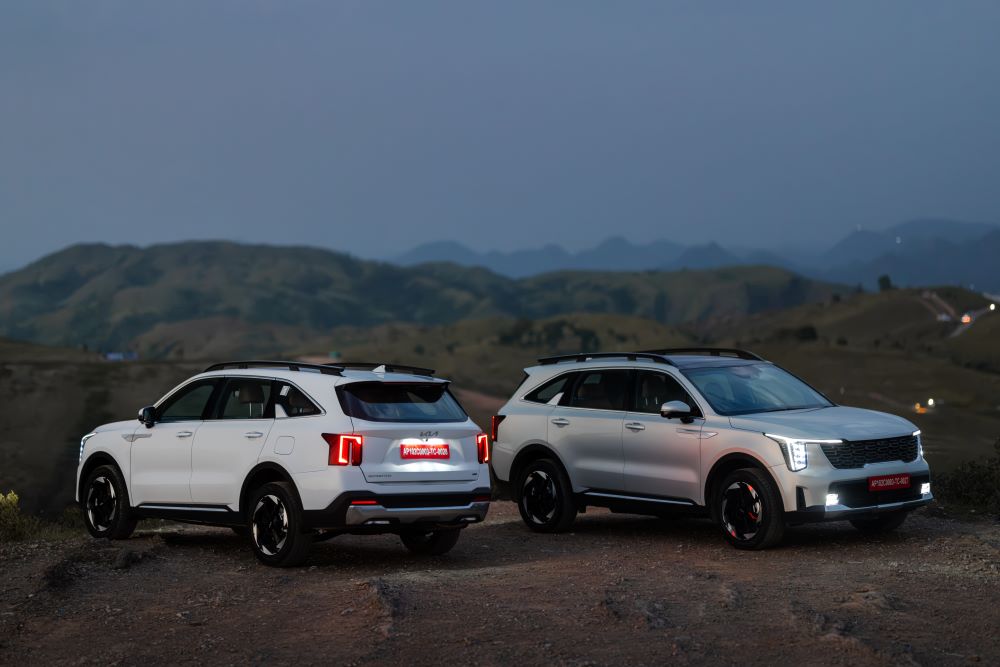
Interestingly, this 1.6-litre turbo-petrol is mated to a 6-speed automatic transmission, instead of a CVT (constantly variable transmission), as is the norm in hybrids. CVT’s are preferred in hybrids as they allow the internal combustion engine to operate in its power band or “island of peak efficiency” most of the time, regardless of the speed of the vehicle. This also causes the “rubber band effect”, where you hear the engine revving, but the car not does move forward proportionately.
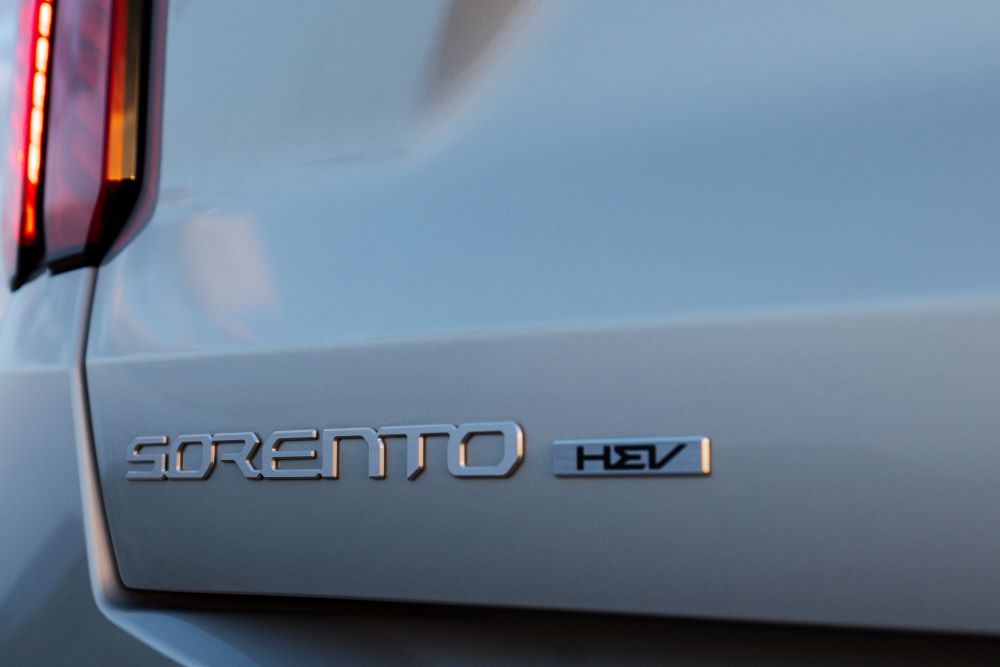
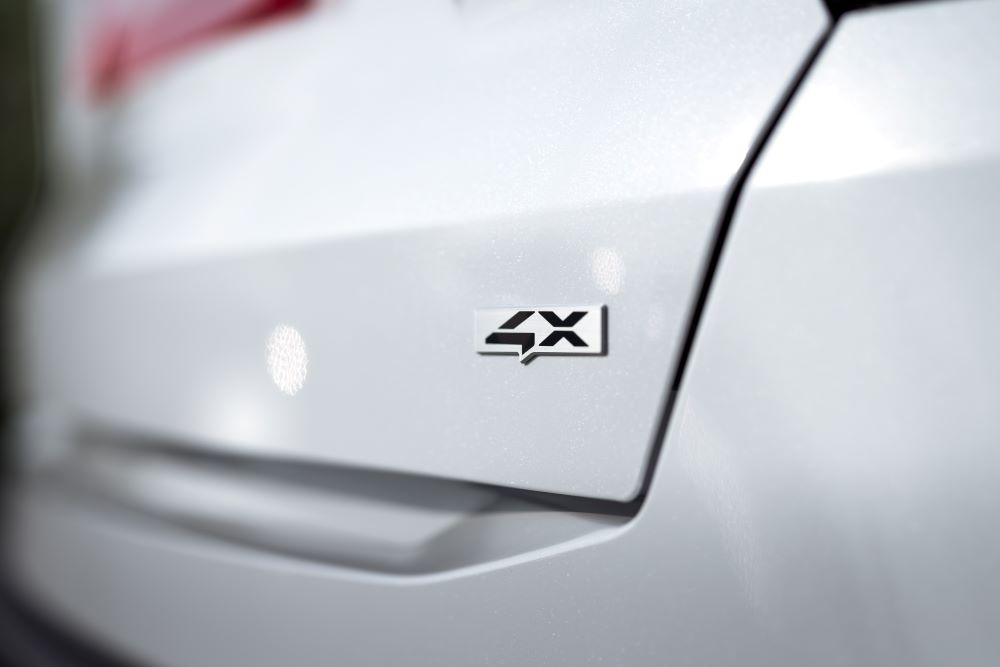
As a CVT lets the engine rev instantly, from what I understand, this would not have aligned well with the Sorento’s turbo engine and the way it builds boost. As most of you know, a turbocharger takes a split second (also referred to as turbo lag) to build exhaust pressure and deliver its peak torque. The 6-speed torque-converter automatic fitted on the Kia Sorento mates well with its hybrid system, because it holds on to its mechanical gears, allowing the turbo engine to build its boost before shifting to the next gear, and this results in better response and makes overtaking or rapid rise in speed easier. The other benefit of course is that because the conventional 6-speed auto does not have the “rubber band effect” with the engine constantly revving hard, NVH levels inside the passenger compartment are lower, something desired in a SUV with premium positioning.
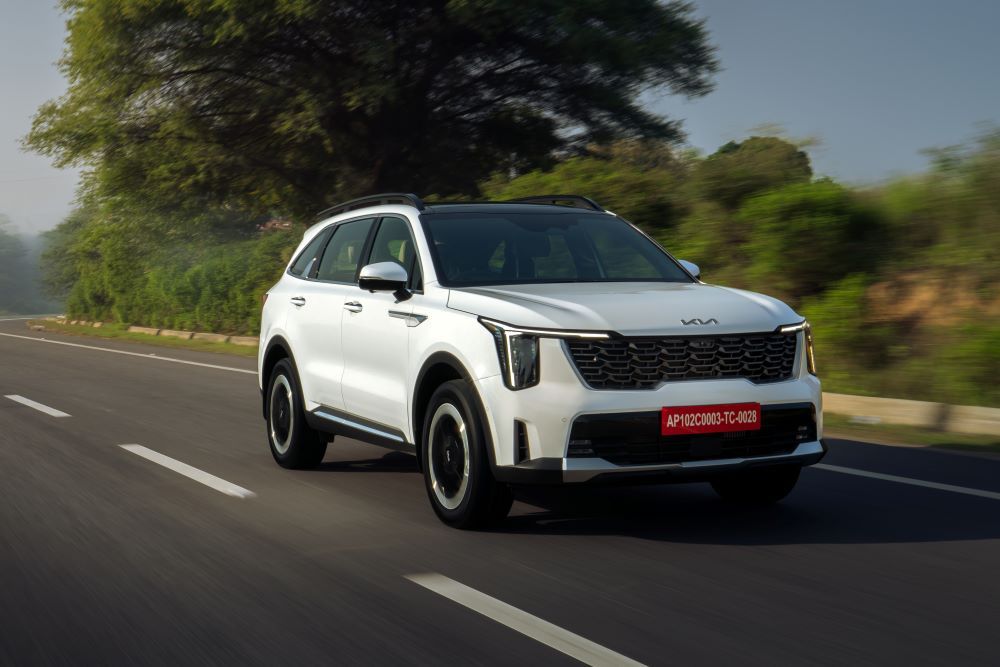
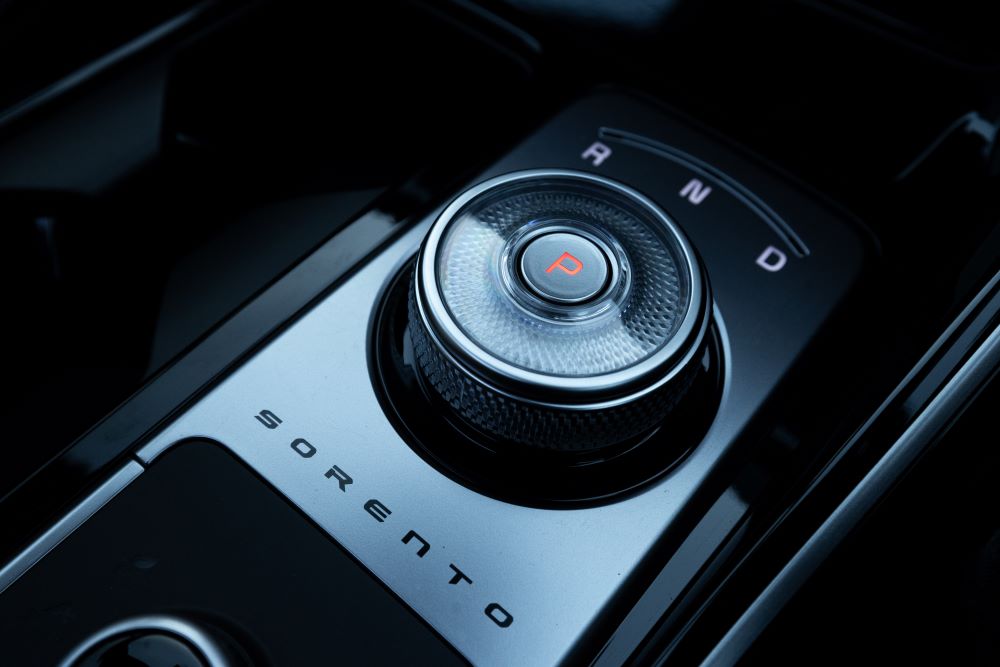
And it’s due to all this that I say the Kia Sorento is both a smooth, and silent operator. Its hybrid system is well up to the task of driving this big SUV. Like all hybrids, the Sorento also starts off in EV mode with the motor driving it. And then as explained above, as and when required, the petrol engine is seamlessly deployed. Throughout the driving experience there is no lack of power or any sudden surge of it. So, its best not to expect that instant acceleration you get in many EVs, or even hybrids. The Kia Sorento builds its power in a linear manner and in the city, it happily glides along silently, but it also has the long legs required for comfortable highway cruising. The handling, brakes, and steering are all well sorted and while the Sorento is no sporty athlete, it obediently follows the instructions of the driver and inspires confidence. It won’t make you jubilant about the way it responds to your inputs, but neither will it depress or disappoint you. It’s a mature, predictable, and comfortable companion to have, if you know what I mean.
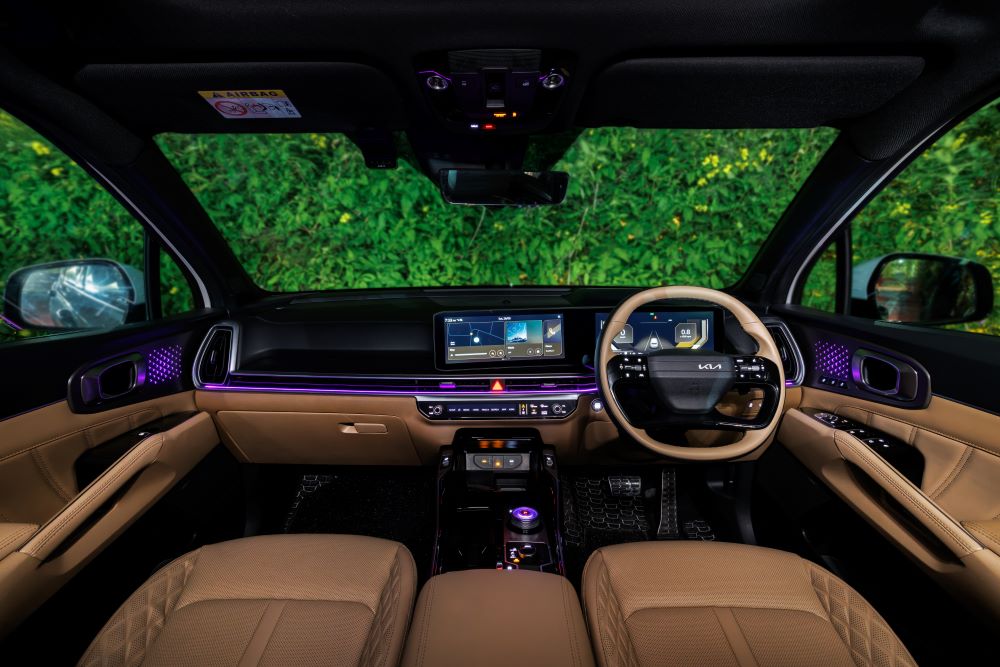
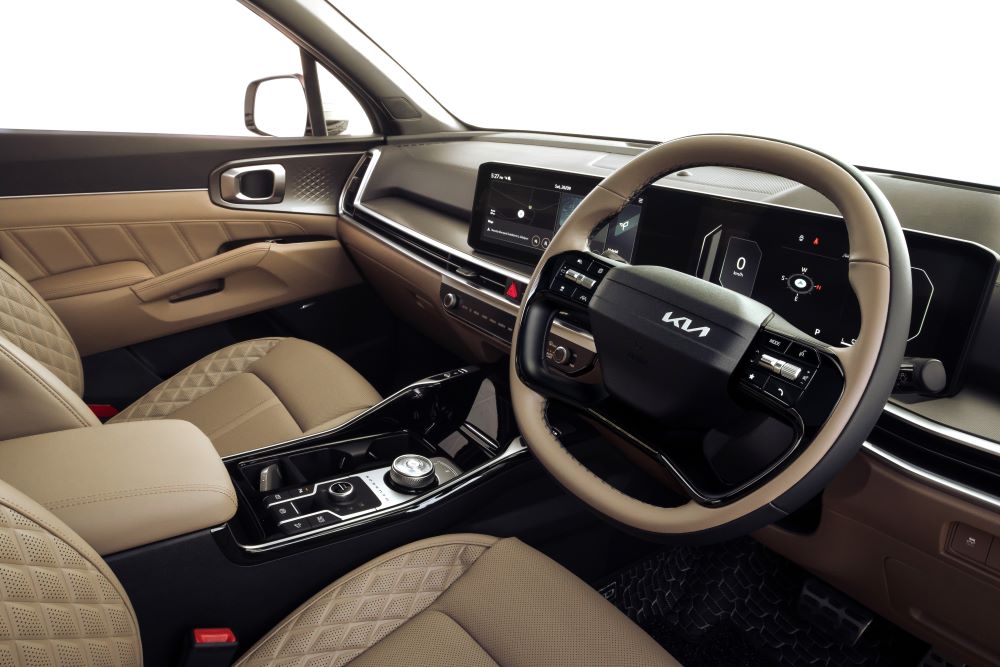
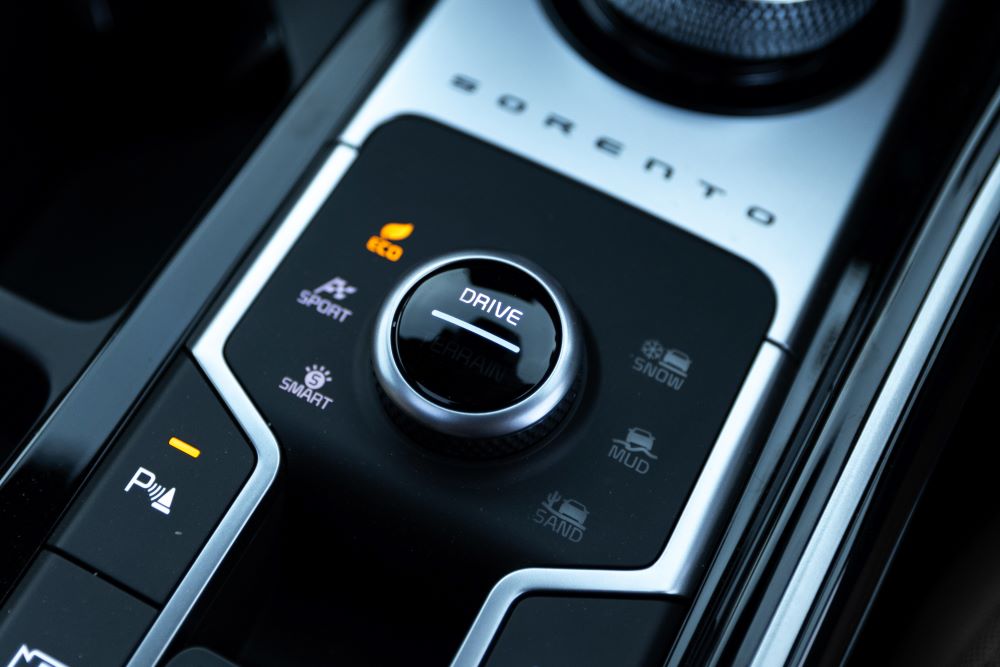
There are 3 driving modes, namely Eco, Sport and Smart to alter the mood and behaviour of the Sorento. The Smart Mode, is well smart, and according to Kia is an adaptive driving setting that automatically adjusts the vehicle’s engine, transmission, and steering behavior in real time based on your current driving habits. Smart Mode is supposed to act as an automated assistant and if you are driving gently, then the driving mode will automatically change to Eco. And the moment you show some aggression and accelerate hard or quickly move the steering, the driving mode will shift to Sport.
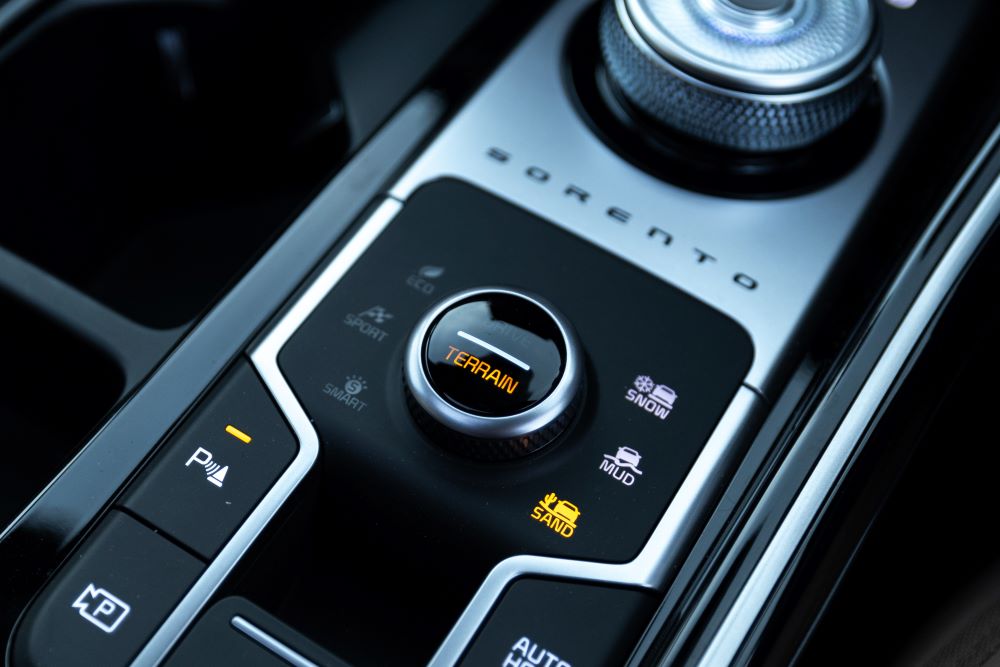
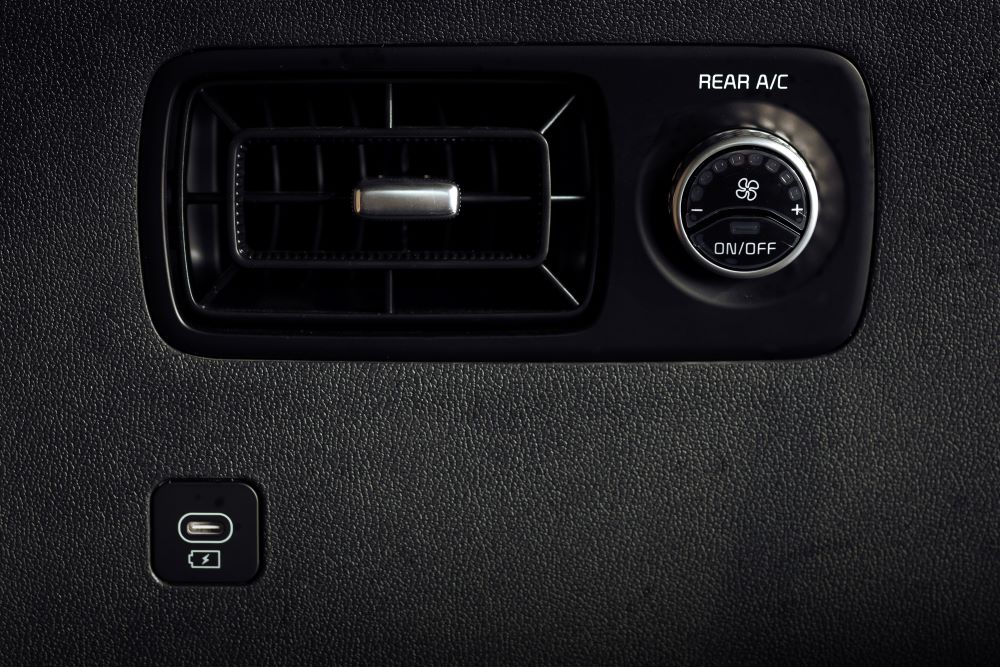
In the AWD (all-wheel-drive) you get modes like Snow, Mud and Sand and Kia have built in Over-the-Air software updates for some 30 such controllers! Actually, the Kia Sorento is packed with hi-tech modern features and it’s a long list with things like – digital IRVM, remote parking assist, Kia AI Assistant (Real-time Generative AI) with voice command, digital key, 6 Type-C USB charging ports, 12 parking sensors, 5 radars, a blind-spot view monitor, adaptive cruise control, collision avoidance, lane centering assistance, high beam assist, rear cross-traffic collision avoidance assist, safe exit warning, and so on. The Kia Sorento also has 10 airbags, hill assist control, hill descent control, front and rear dashcam, rear ventilated seats, one-touch seat adjust (Boss Mode), etc. If you really need to know more, I suggest you please refer to the company brochure.
Let’s get back to the car and the beauty of hybrids, which is fuel efficiency along with lower emissions. And the Kia Sorento’s ARAI fuel average figures are 19.60 kmpl (front-wheel drive) and 17.70 kmpl for the AWD (all-wheel-drive). In real-life conditions, I estimate this to vary between 14 to 17 kmpl depending on the variant, and driving style and conditions. Nevertheless, for a large 7-seater SUV, these are quite impressive figures. And as the Sorento has a fuel tank capacity of 67 litres, its range will easily be over 1000 kms, which again is most welcome, especially for road trip enthusiasts like me.
Please also bear in mind that the Kia Sorento is one of those SUVs that is actually bigger than it looks, with its sleek styling helping conceal its bulk, just like a smartly cut suit or dress does for us human beings. Just look at this comparison of dimensions. With a length of 4,815 mm, the Kia Sorento is 20 mm longer than a Toyota Fortuner (4,795 mm). At 1,900 mm, it is also 5 mm wider than the Fortuner (1,855 mm). But due to it ladder frame chassis and more focus on off-road ability and ground clearance of 225 mm, the Fortuner with a height of 1,835 mm, is a full 50 mm taller than the Kia Sorento (1,785 mm). The diesel powered Sorento has a ground clearance of 209 mm, which is fairly decent. But on the hybrid the ground clearance is lower due to the battery placed under the floor.
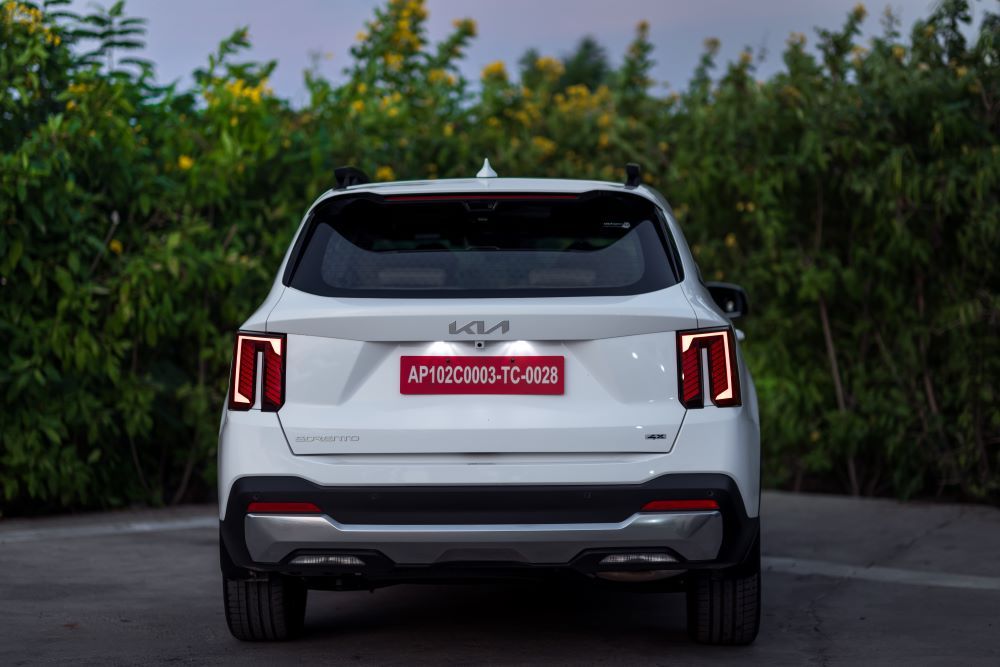
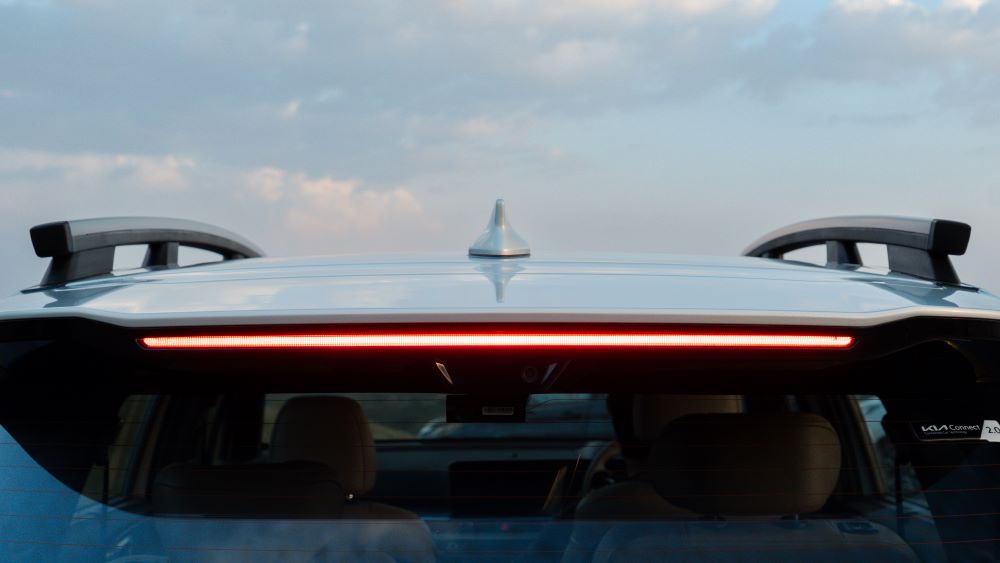
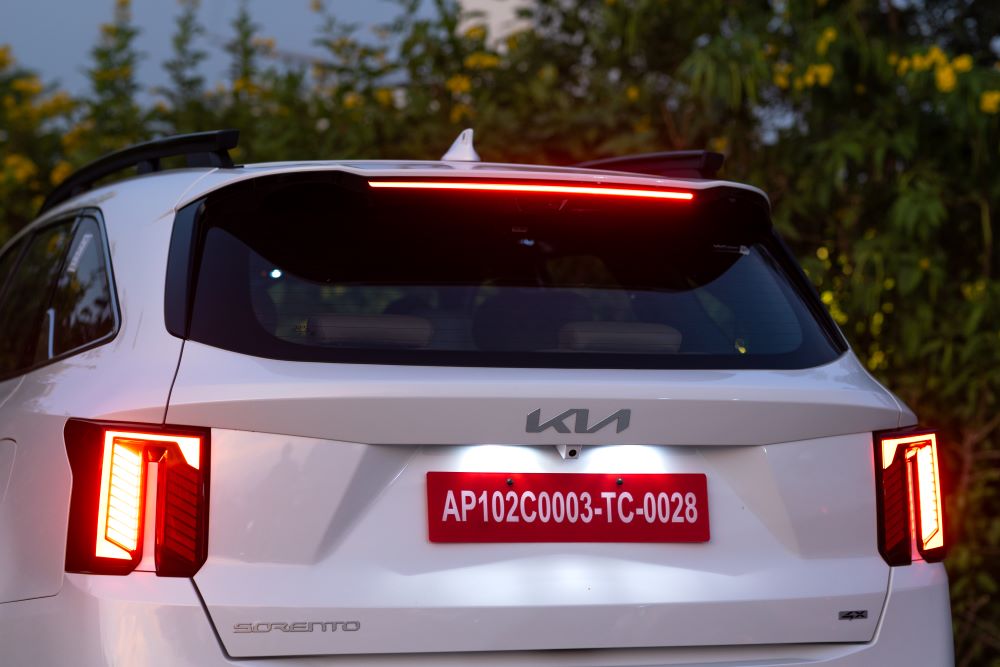
Interestingly, this 1785 mm height of the Sorento is with its standard factory fitted prominent roof rails, or bridge-type roof rack. These rails are required in some international markets where people are into activities like skiing, surfing, cycling and so on. But in India, they are just for ornamental purposes and in my view if Kia does away with these rails for our country, the Sorento would look a lot sleeker and lower. These roof rails also generate a fair amount of wind noise at speeds over 100 kmph, so Kia should really consider removing them.
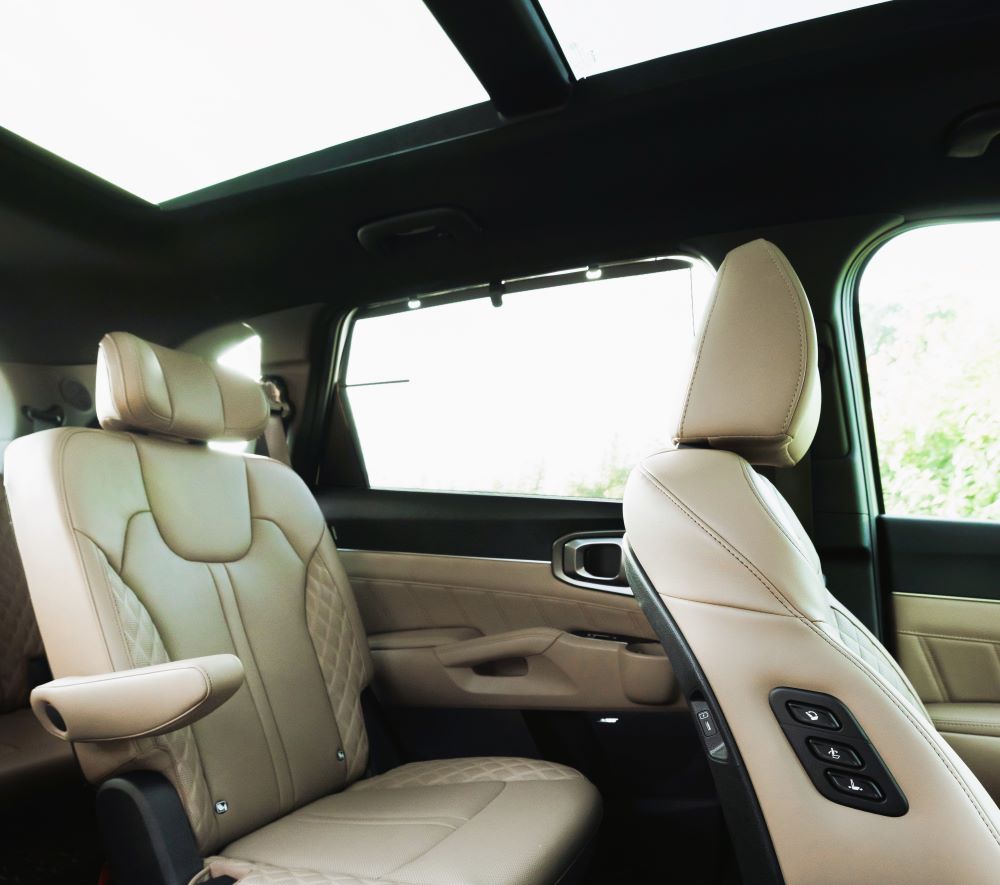
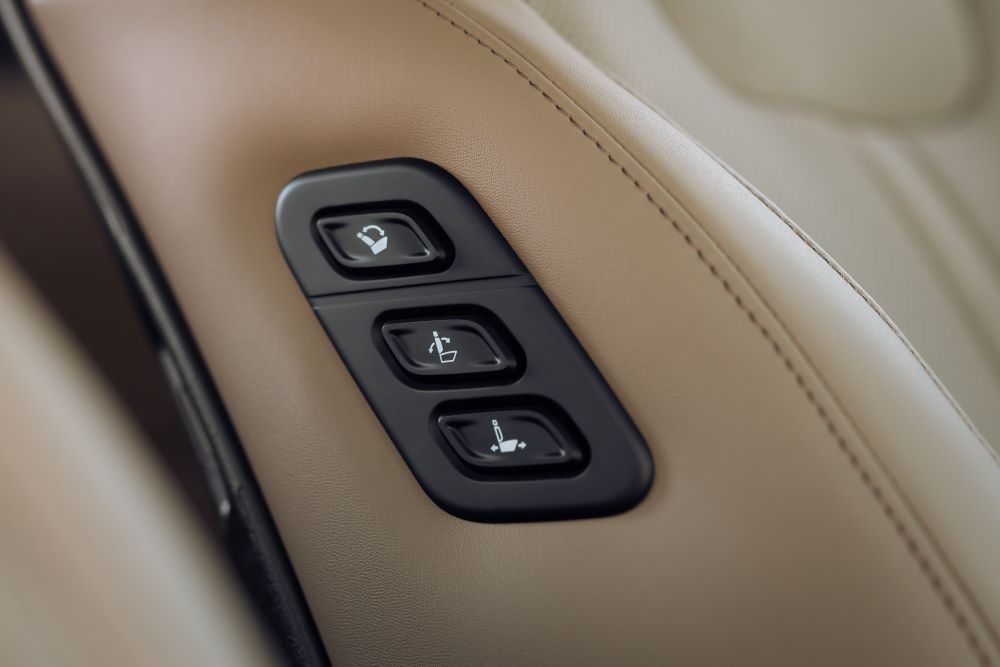
The interior of the Sorento is well laid out and nicely finished with tasteful materials, however some of the plastics feel hard and could also have better finish. Both the 1st and 2nd rows cater agreeably to the comfort of passengers with the seats being nicely shaped and comfortable. In the 2nd row you also get the option of captain seat and this is the version I tried. Both space and comfort are excellent, and the seats can be reclined too. But I found that they are already at quite a reclined angle, and if you try to use the electric controls to make the back more upright, it does not happen, and it stays stuck in a leaned-back position. Later I learnt if you try to bring the seat back up from its reclined position, the internal gears latch into a default safe zone, and to make it fully upright you need to move the lever or adjuster switch in a different manner or something. I find this odd, and will try and figure this out properly the next time I get into the Sorento.
The Sorento can be had in 6 or 7-seater versions, and in both, the last (3rd row) is cramped and good mainly for children. Getting in or out also requires some effort and this additional seating is best used for short runs. And if you have the 3rd row seats up, boot space is a meagre 179 litres, which grows to a substantial 813 litres with them folded down
Now to the most important question – would I want to get into it? Undoubtedly yes. The new Kia Sorento has a lot going for it, especially its hybrid powertrain. And though I did not test it, let’s not forget that it also comes with an efficient 2.2 litre diesel with an 8-speed dual-clutch transmission. This turbo-diesel engine that also does duty in the Kia Carnival, produces 190 bhp and 442 Nm of torque and is responsive and refined, and has more than enough power to make the Sorento a brisk mover. It may not be explosively fast, but it’s a proven performer with the stamina and strength to keep the Sorento ahead of most of the pack. Curiously, the diesel variant of the Sorento has one more driving mode – Normal, which you don’t get in the hybrid. I wonder why? But I will hazard a guess – it’s because the diesel does not have an electric motor to even out its power delivery, requiring a fixed, middle-ground setting for everyday use.
The fuel efficiency figures for this diesel variant as per ARAI-certification is 15.79 kmpl for the AWD and 17.66 kmpl for front-wheel-drive. This I anticipate would be between 14 and 16 kmpl in real life driving conditions, making the diesel Sorento quite fuel economical. I am sure this will be appreciated and it remains to be seen if the diesel outsells the hybrid, or vice versa. It will be interesting for sure and an indicator of customer preferences and perceptions.
The ride quality again is something that will be open to customer interpretation and fondness. Reason I say this is because the Kia Sorento has a suspension setup designed for European driving conditions, which means it’s a little on the firmer side and engineered to control body movement and roll. At higher speeds this works beautifully, but in city traffic, and while going over potholes and other imperfections, the suspension is quite vocal and you can hear the thuds more than you do in a vehicle with a soft suspension. Personally, I prefer a firmer ride, but I also know enough people who rather have a softer setup.
Since Kia is assembling the Sorento at its manufacturing facility in Andhra Pradesh, the ex-showroom price ranges from ₹27.99 lakh to ₹40.39 lakh. At these prices and with all that it offers, in my opinion the Kia Sorento has everything to give the Toyota Fortuner a run for its money. But with the Fortuner having created an incredible brand image and strong loyalty for itself, it remains to be seen if this will happen? But SUVs like the Skoda Kodiaq, Volkswagen Tayron, Jeep Meridian, etc, are all sure to feel the heat.

One other aspect that I feel will surely work in favour of the Kia Sorento, are its choice of a hybrid, as well as diesel powertrain. None of its competitors that I can think of now, provide this choice. And Kia still has another card up its sleeve. In some international markets the Sorento also comes as a PHEV (plug-in hybrid electric vehicle). It has the same 1.6-litre turbo- petrol engine, but it’s combined with a more powerful 66.9kW electric motor and 13.8kWh battery. Kia India have not said anything about introducing this PHEV – but maybe if the response to the hybrid is good, then we could expect the PHEV in the future. And yes, there is no doubting the fact that soon we will start seeing lot more hybrids in our country. Something that maybe should have happened before we leapfrogged and jumped straight to EVs. But let’s not forget – Oh Darling – Yeh Hai India.
Bob Rupani is a born car lover and avid automobile enthusiast who has spent some of the best times of his life behind the steering wheel.