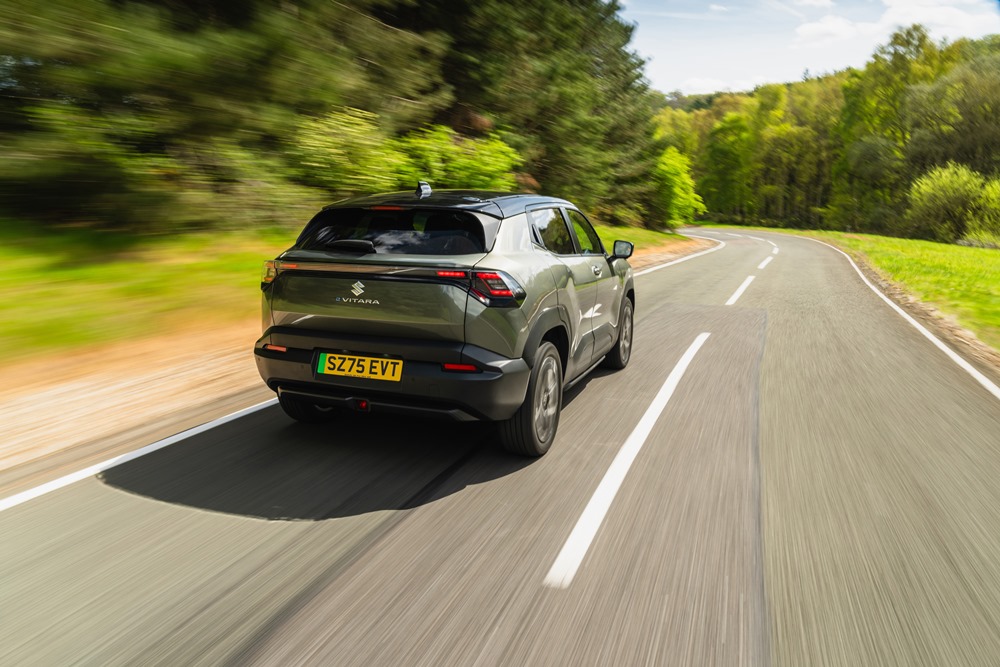
Made in India, driven in England. Yes, had the unexpected pleasure of driving Maruti’s first EV in UK, before it debuts here.

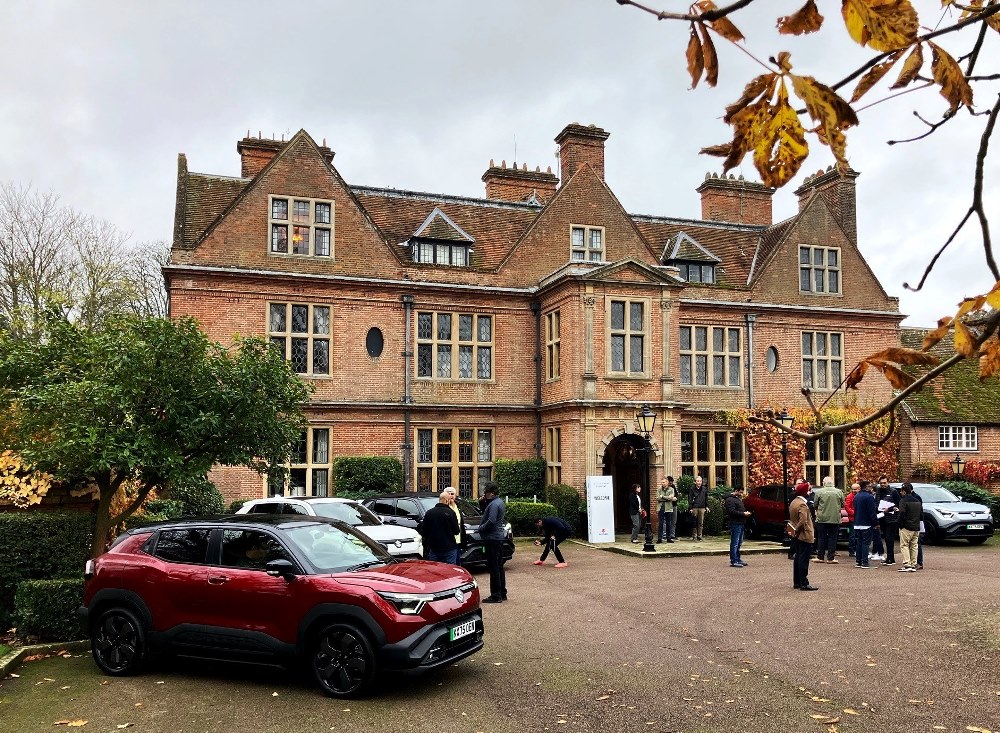
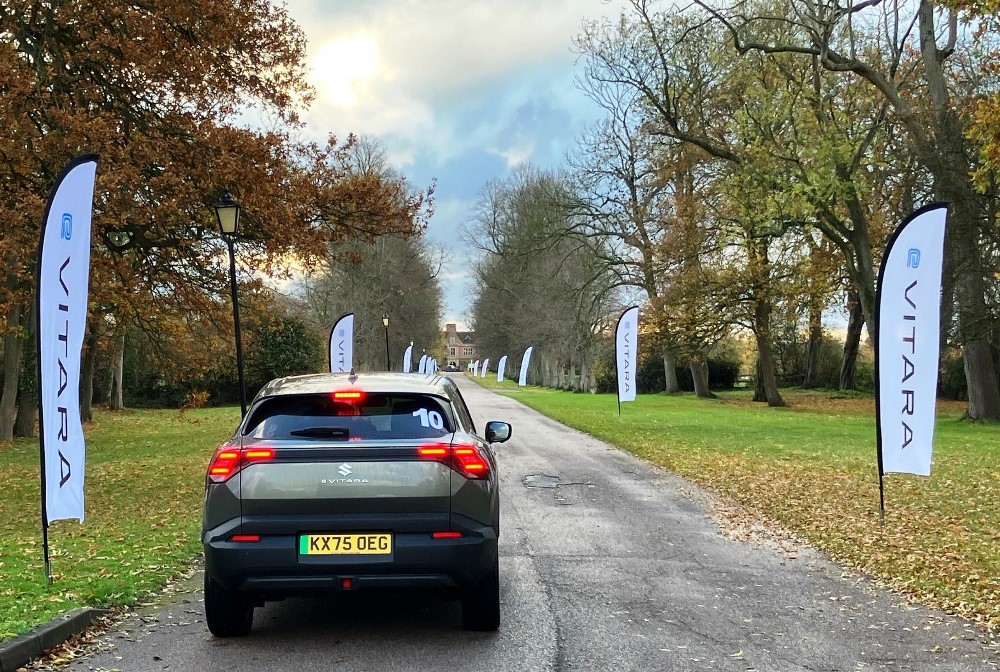
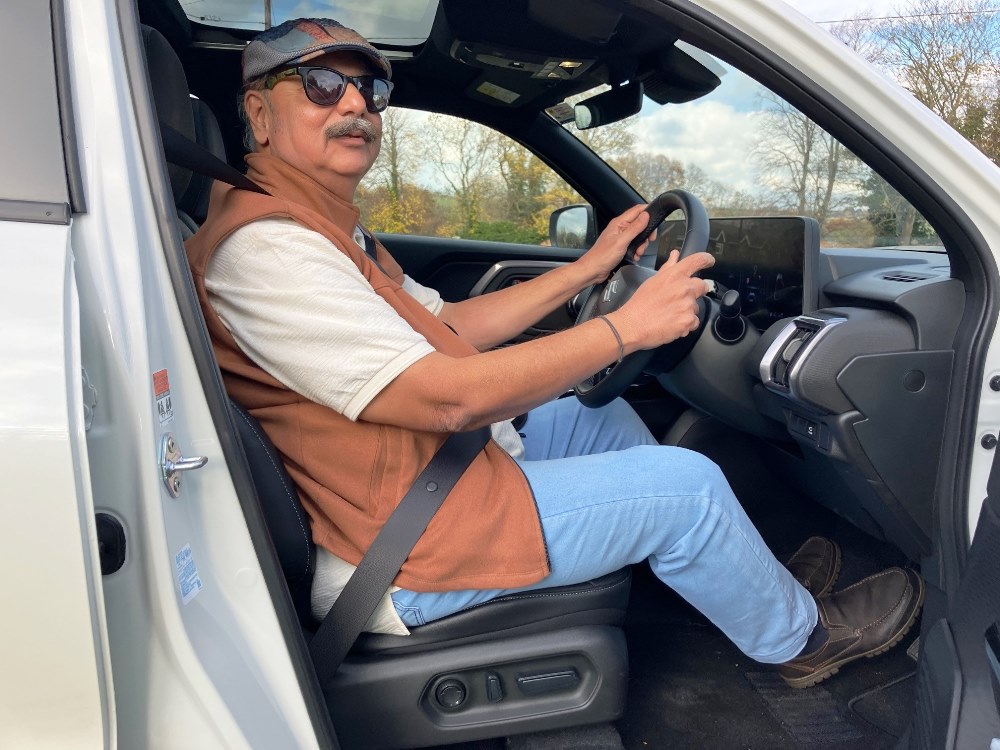
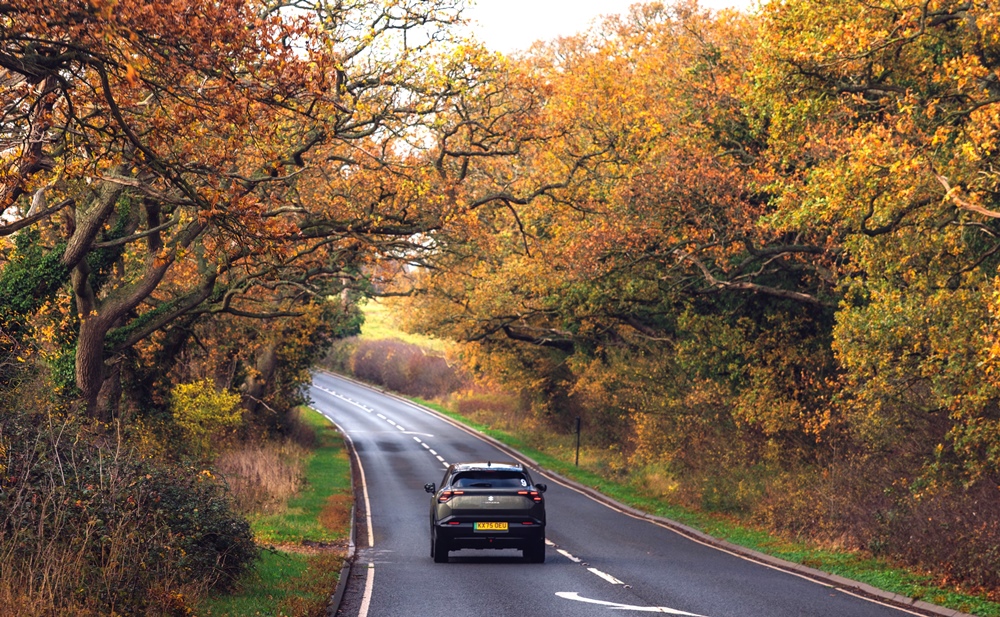
After almost 40 years of testing and reviewing cars, there are not many things that surprise you. But I had a quite a nice one recently when I had the opportunity to drive the made in India Suzuki e Vitara (Maruti name is not used in UK) in England. Yes, the Vitara which is manufactured at Maruti Suzuki’s Gujarat plant is exported to over 100 countries, including the UK. And before it gets launched in India, I was invited to drive it in the pretty environs of the English countryside. And what a proud experience this was.
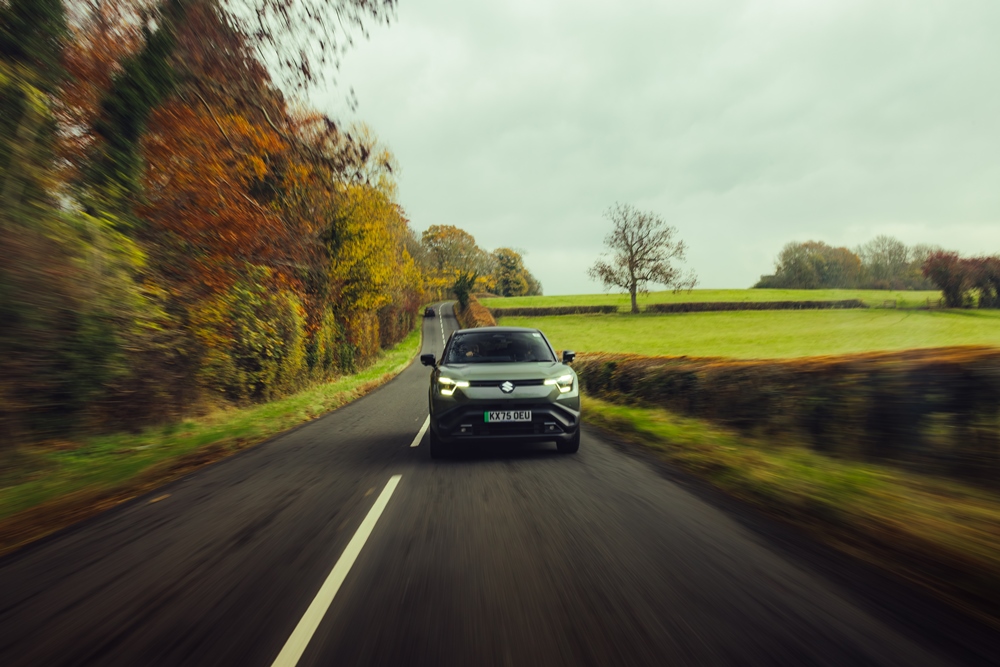
Imagine a car completely made in our country, being shipped and sold in Britain, and an Indian going there to get acquainted with it. “Quite a Reversal of the Raj, eh?” And what is also heartening is that I met several Brits who were delighted that a “Made in India EV” was now being sold there and providing a viable alternative to Chinese EVs.
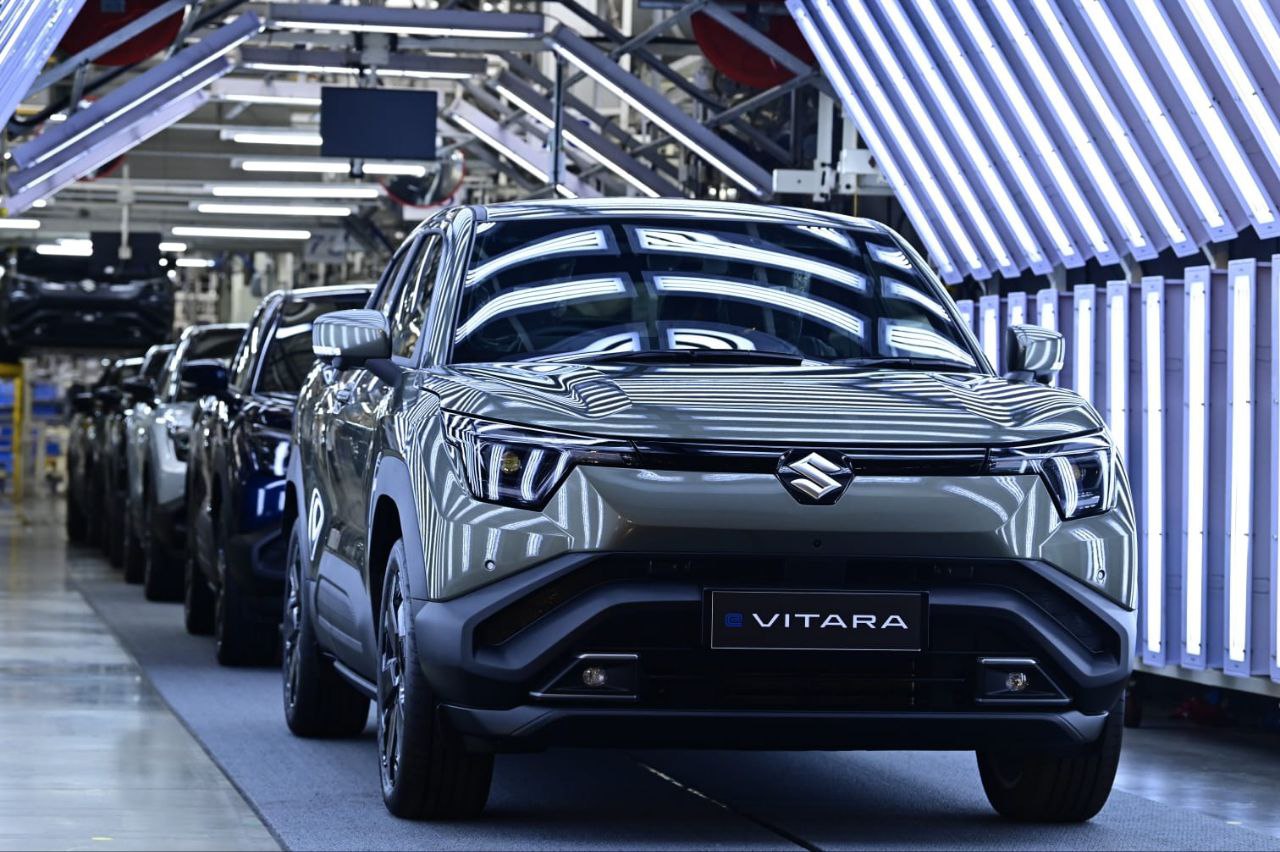
This is also a great example of how closely Japanese companies like Suzuki are working with our country, due to which India is now the sole production hub for their first ever BEV (battery electric vehicle), the Maruti Suzuki e Vitara. Remarkably, the e Vitara has been exported first and is being sold in advanced western countries like Germany, Norway, France, Denmark, Switzerland, Netherlands, Sweden, Hungary, Iceland, Austria, and Belgium and so on, even before it has been launched in India. However, we don’t have long to wait, as the India launch of the Maruti Suzuki e Vitara is also around the corner, and I should be driving it on our own roads in a month or so.
Now let’s talk of the vehicle itself. The Maruti Suzuki e Vitara is built on an all new electric platform, known as the HEARTECT-e. Being a “Born to be EV” right from the concept and design board stage, it’s engineered to be powered by batteries and driven by motors. Compared to IC (internal combustion) engine vehicles that are converted and adapted to run on electricity, a pure EV has certain distinct advantages like a platform designed to accommodate the large and heavy battery pack, and the motors, wiring, heat dissipaters, charging port, appropriate suspension, etc. And what I like is the approach that Maruti Suzuki engineers have taken in making the e Vitara.
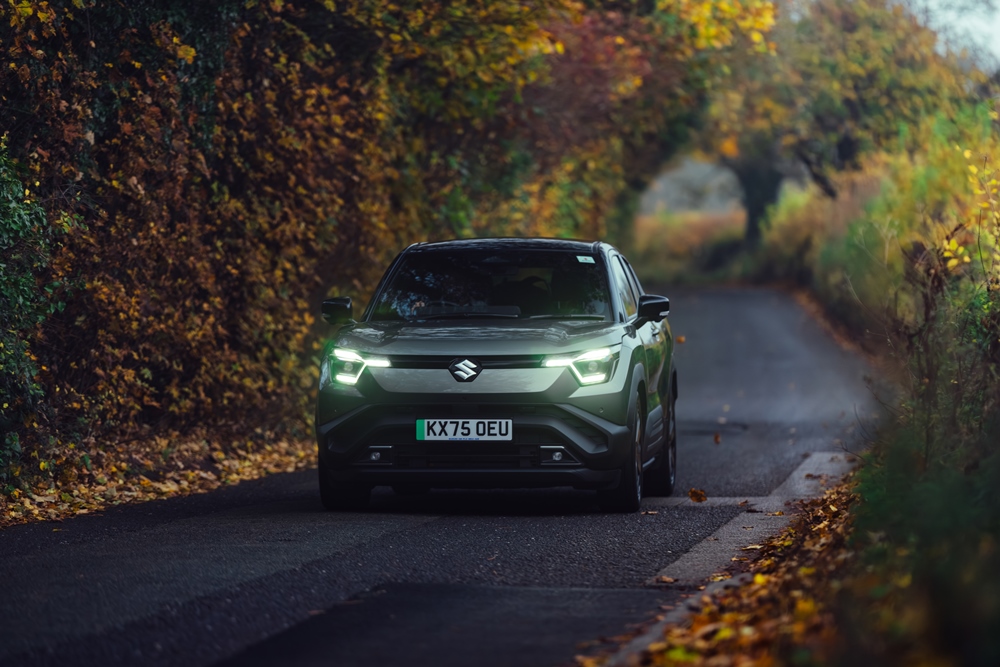
In my view, the two most distinguishing and appreciable characteristics of the e Vitara are that it does not run like a typical electric vehicle and neither does it sound like one. EVs, including the small ones, are defined by their instant torque delivery and surge of power from a standstill that can throw you back in the seat. Even the electric rickshaws and unregistered delivery bikes can accelerate faster than many IC vehicles. It is this immediate rush and floodgates opening kind of power delivery, that is absent in the e Vitara. And while many may miss it as this is what they have come to expect in an EV, I welcome it. Let me explain why.
If the driver does not know how to use it, instant thrust can lead to jerky and tiresome driving. Whereas linear power delivery provides a more relaxed and effortless driving experience where you move ahead without the sense of being thrown back or forward every time the accelerator is pressed or released. The instant response may be exuberant and exciting, but the calibrated one is more measured and mature. And it is this kind of response that the engineers have opted for in the e Vitara and they need to be complimented for not succumbing to the temptation of “prompt power”.
Let me cite one more example. It may not be the most suitable one, but I hope it helps in driving home my point. Ever wondered why Roll-Royce don’t provide an rpm meter or tachometer, in their cars and instead have a power guage that displays the amount of power being delivered, and what’s in reserve. Their cars have massive engines with tons of power. But this is reigned in and released in a well calculated manner so that the occupants glide forward gracefully and smoothly, without spilling their costly champagne, on their even more expensive dresses or suits.
That’s why I like this kind of unexpected gradual and calibrated power delivery in the e Vitara. Batteries and motors inherently produce instant torque, and quite a lot of it. But in the e Vitara this torque is steady and though I have not seen the torque curve graph, I imagine it is flatter than that of most other EVs. And mind you, despite this the e Vitara is not slow or sluggish. It stills gets to 100 kmph in around 8 to 9 seconds, depending on the battery pack size. Yes there are two packs available, a 41kWh battery one that has a claimed range of 344km, and a 61kWh battery which is supposed to deliver 428km. I am told the range in India will be higher due to a different setup and driving conditions. But its best to wait for those details.
The other thing that I like a lot, and which I mentioned earlier, is that the e Vitara does not sound like a typical electric vehicle. Yes, EVs are silent and don’t have the sound of an engine burning fuel and the exhaust letting out gases. But they do have an electric whine or hum made by the motors, inverters, and other electrical components. This may not be very loud, but it can certainly be heard by those with sharp hearing.
Personally I find it disturbing and it reminds one of standing under a high power transmission line; where at times you also hear a buzz and the current passing through. Most such electrical component generated sounds are well dampened or isolated in the e Vitara and I believe the engineers focused specifically on preventing them from intruding into the passenger compartment. And if I could not hear any of these EV hums or whines on the quiet and serene English country roads, where hardly anybody ever blows the horn or makes any other noise, I don’t think they will be at all audible on our far louder and chaotic streets.
While designing any new completely electric vehicle, one of the dilemmas is should it look like a conventional car, or be different and futuristic. Of course being aerodynamic is more important too as you don’t just want to slip through the wind to increase range by reducing the load on the battery, but you also want to decrease or eliminate any wind noise as this can be heard more clearly in the more silent EVs.
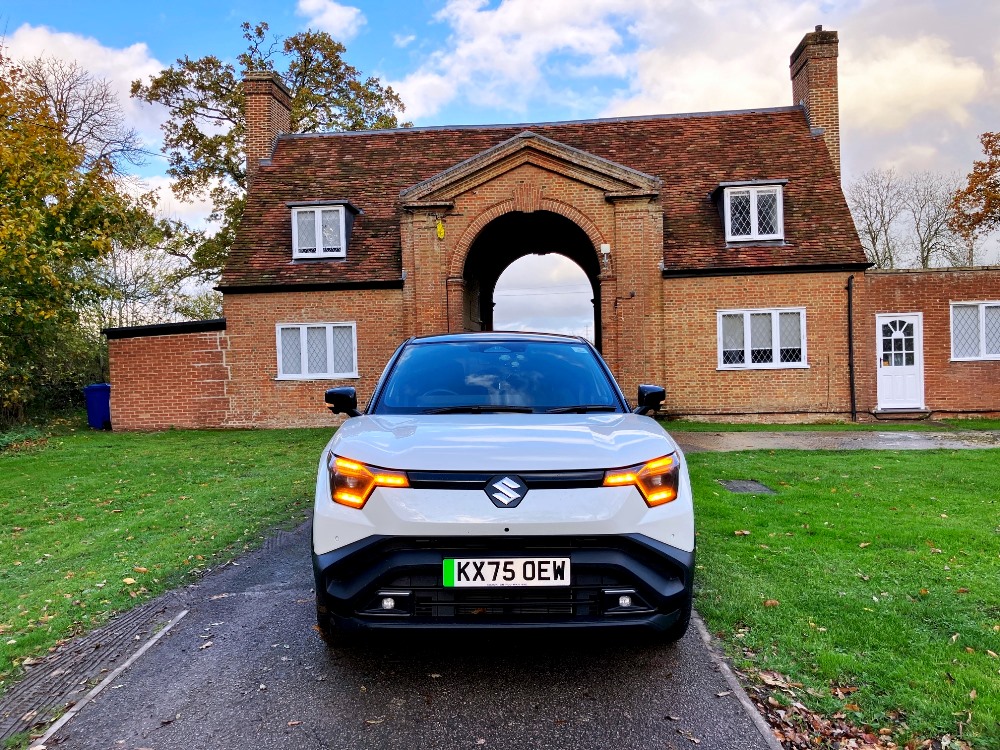
Then there are factors like the absence of a radiator, engine, and conventional gearbox, etc. And the need to cool batteries which are normally mounted low in the floor. So the shape, air intakes and so on are also determined by these aspects along with safety regulations and requirements. Since Suzuki are also offering the e Vitara with all-wheel drive in certain foreign markets, they needed it to have a body style and clearances suitable for driving beyond tarmac too. Of course for a global product, you also want a globally suitable and acceptable design. So as is obvious, the demands and preconditions are many, and I am told the design philosophy opted for by Suzuki was that of a “3 dimensional form with a powerful and bold look”.

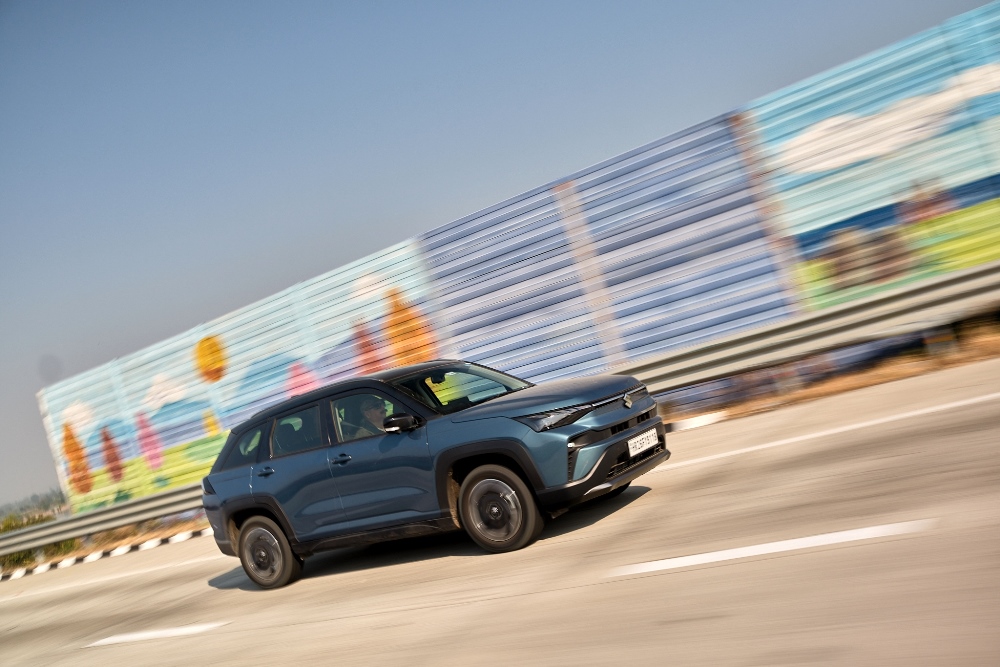
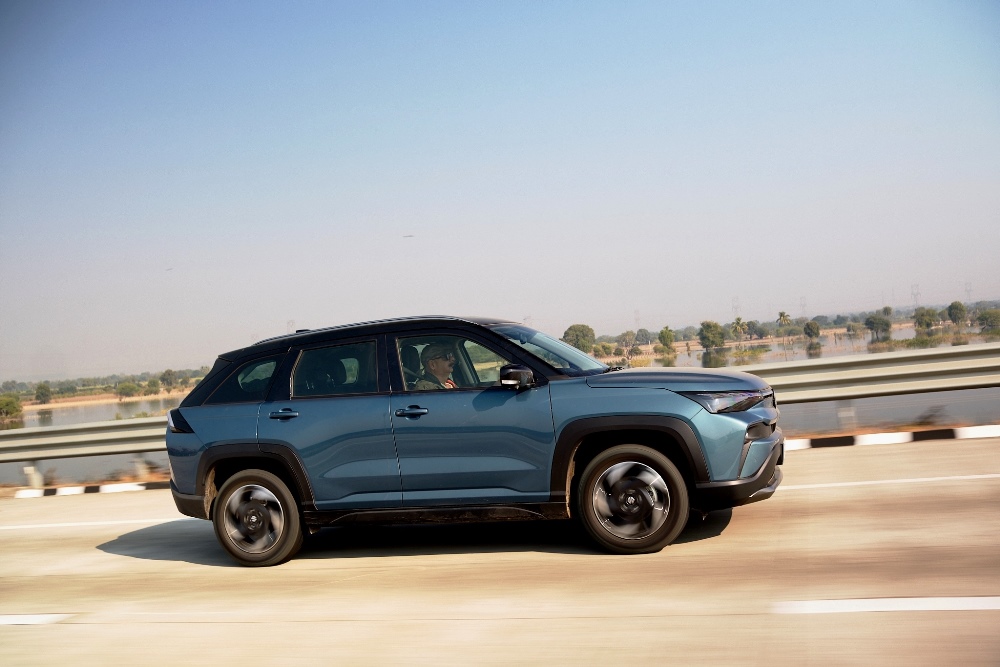
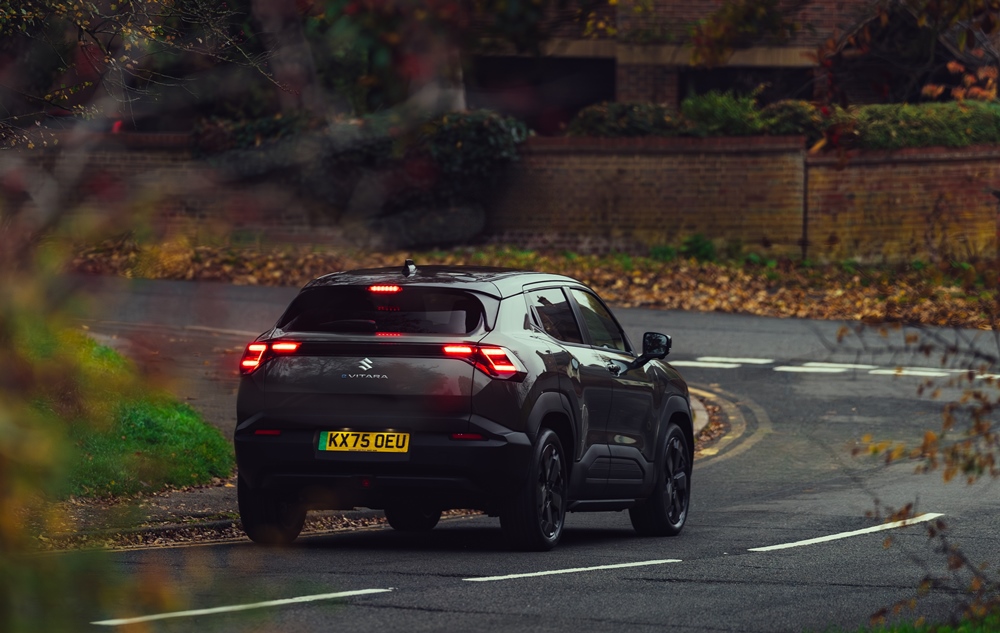
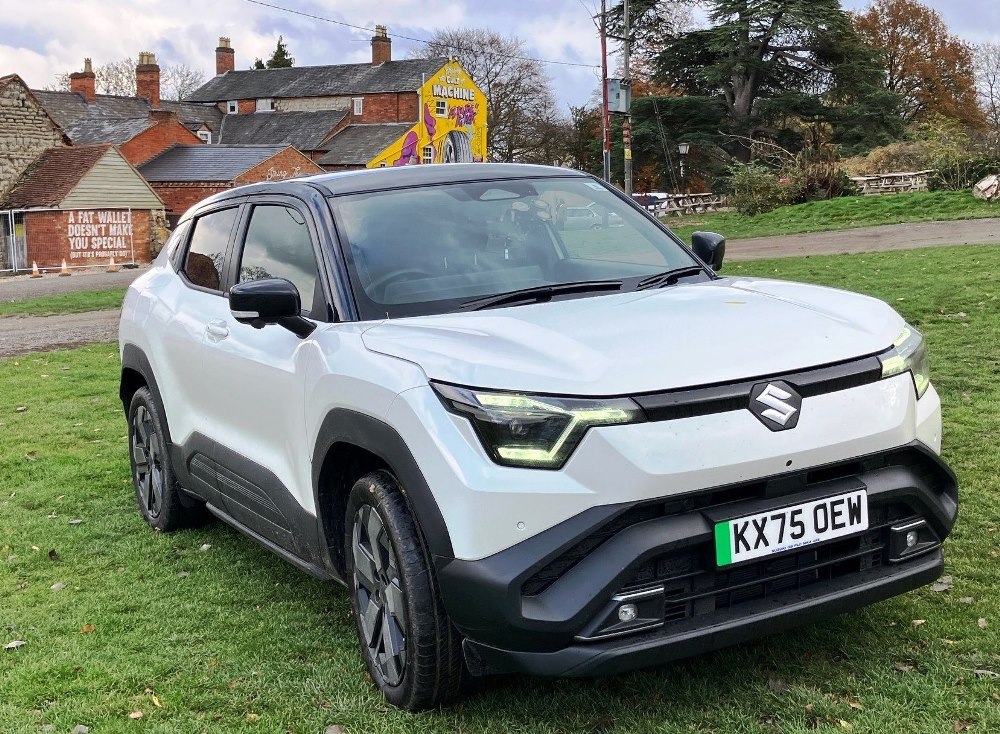
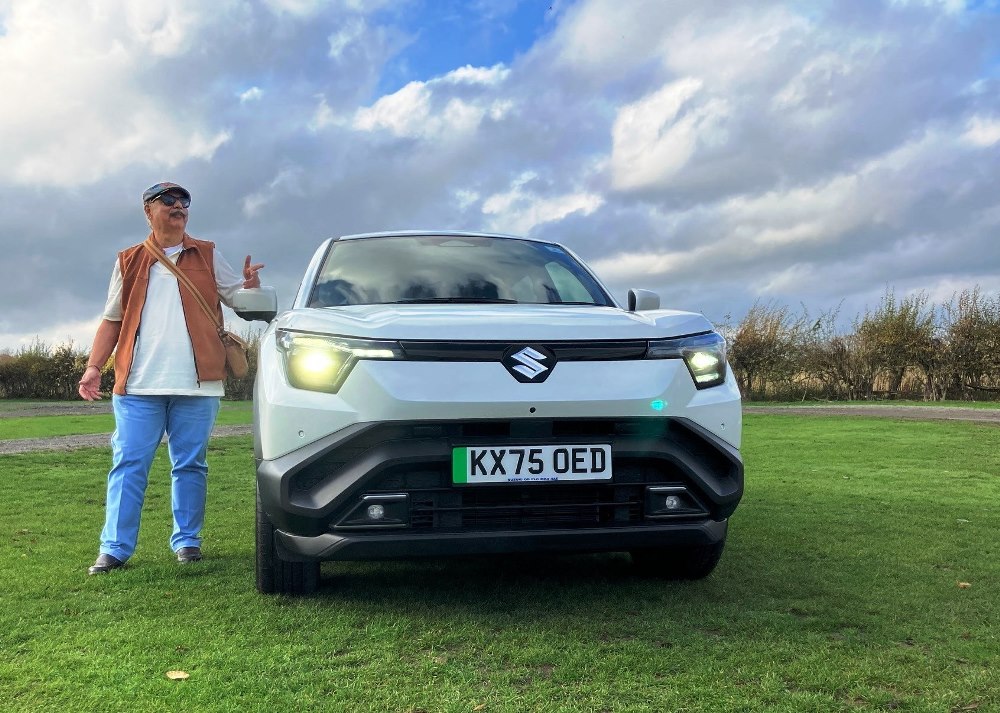
So how does all this translate into physical form? Well in my view it’s a mixed bag really. The e Vitara is certainly eye catching and strong looking, but it’s not SUVish strong, and neither is it sporty. It doesn’t looks like a regular IC vehicle, nor like an extremely futuristic EV. It’s a medley of various forms and styles and some I like, and others I don’t care for. But one thing is certain, the e Vitara sure stands out and does not look like anything else. And it’s also not the kind of styling that you dislike. It will either appeal to you, or simply not stimulate your senses.
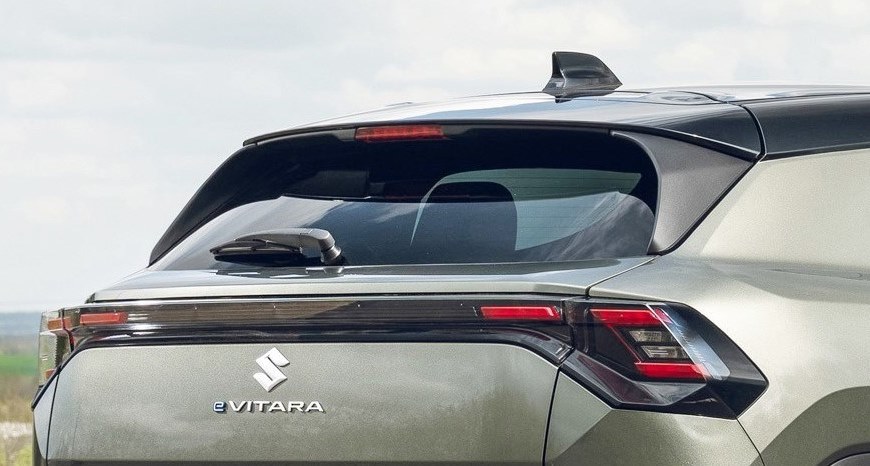
What I find most noteworthy is that unlike what you expect in a SUV, the rear windscreen is more sharply sloped than the front one. But this is not really obvious due to the lower flaps or bottom sections of the 3 piece rear roof spoiler that conceal the acute angle. Maybe the sharp rake and long flaps of the spoiler are there to aid aerodynamic efficiency, but I have a feeling that without these flaps, the e Vitara would definitely have a sleeker and sportier profile.
I will not go into the driving experience and shall wait for my drive in India to describe that, because what I drove was the UK spec version. However I can safely state that the e Vitara is a dynamically well sorted machine with good handling and agility. The ride is a bit on the firmer side, but that could be due to the need to cater to the higher speeds and better roads in the UK. I imagine the India version will not just have a softer ride for better comfort, but the suspension could also be raised to further increase ground clearance. The braking is linear and predictable and the steering is reasonably firm and communicative. All in all, it’s a really nice vehicle to drive.
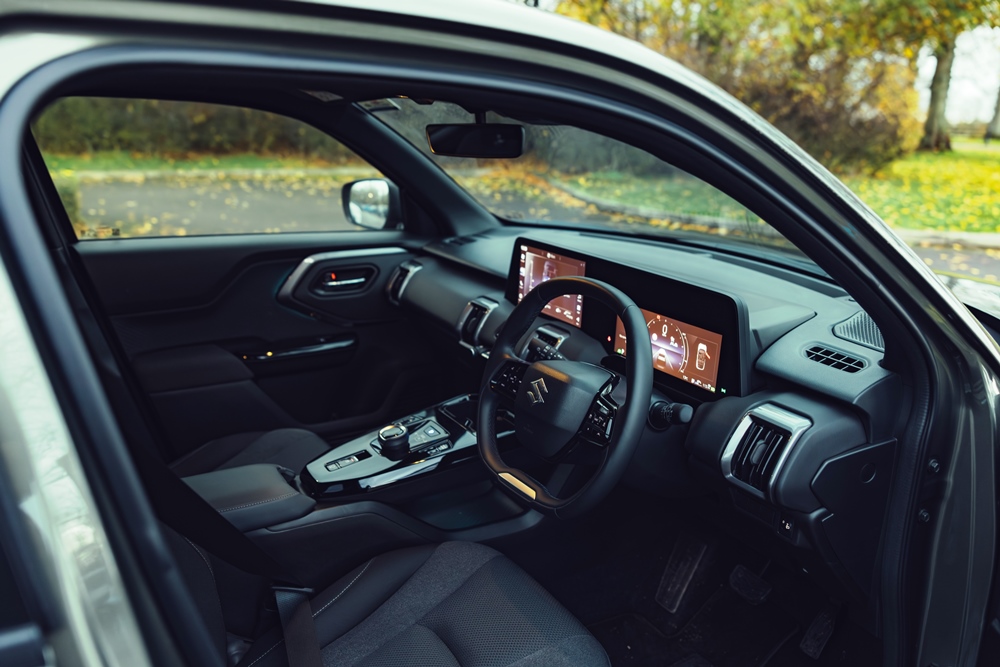
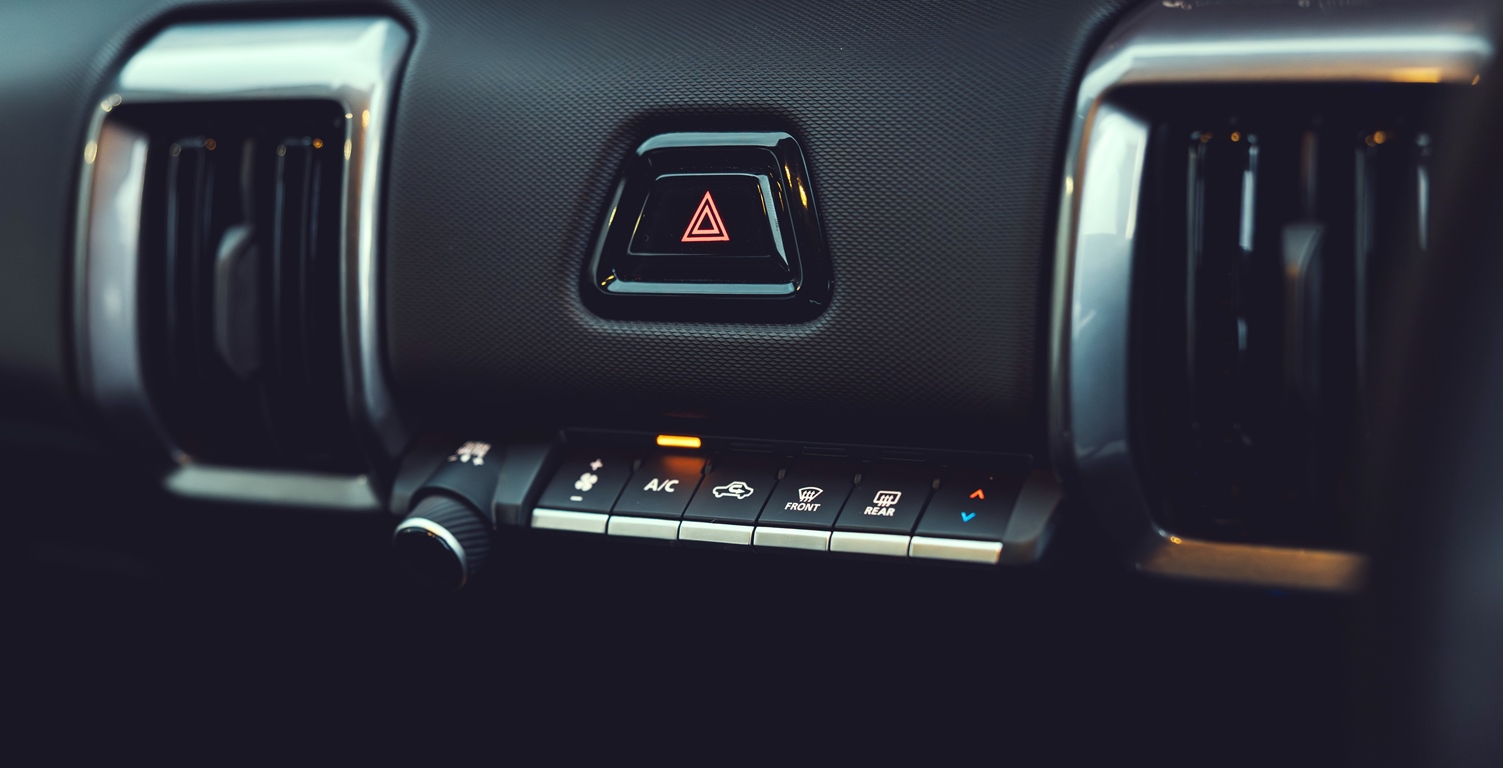
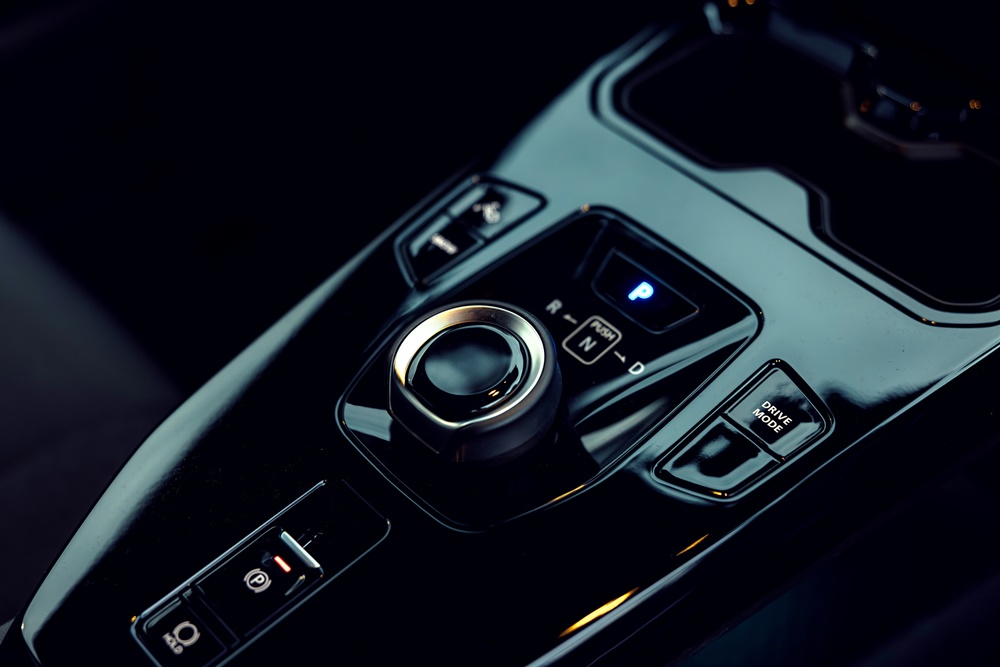
As for the insides, it’s fairly spacious and well outfitted with carefully contoured seats wrapped in appealing materials with agreeable touch and feel. The entire interior has a classy and user friendly atmosphere. Actually, user friendly is possibly the most apt term to describe this passenger compartment. There is nothing gimmicky and flashy with the focus clearly on comfort and practicality. I particularly like the physical toggle type flat and thin pushbutton switches for the AC controls. Unfortunately, though there is a handy button for selecting the drive mode located right next to the rotary drive direction selector dial, the all-important brake regeneration levels need to be set via the touchscreen. It would have been so much better if a button for this had also been accommodated near the drive mode selector.

Anyways, the Maruti Suzuki e Vitara will certainly be a welcome addition in our showrooms and I am sure with its appeal and user friendliness, it will convert and convince lots of more customers to opt for an EV. And knowing the way Maruti operates, you can be sure it will be priced attractively and they will go all out in trying to make the charging infrastructure more easily accessible and customer friendly. For all you know the entry of the e Vitara might just throw open the doors for more electric vehicles to enter the Indian market. So be prepared to get charged. Bijli Giregi. Zaroor Giregi.
Bob Rupani is a born car lover and avid automobile enthusiast who has spent some of the best times of his life behind the steering wheel.