The one vehicle that possibly best exemplifies a pickup for personal use, is the Toyota Hilux. And the new one has just arrived on our shores.

Big, strong, powerful, capable and able to carry both passengers and load in comfort, along with go anywhere ability. The moment you ascribe these abilities to any vehicle, the one that immediately springs to mind is the Toyota Hilux, the ultimate pickup with an unmatchable record for reliability and satisfaction across our planet.
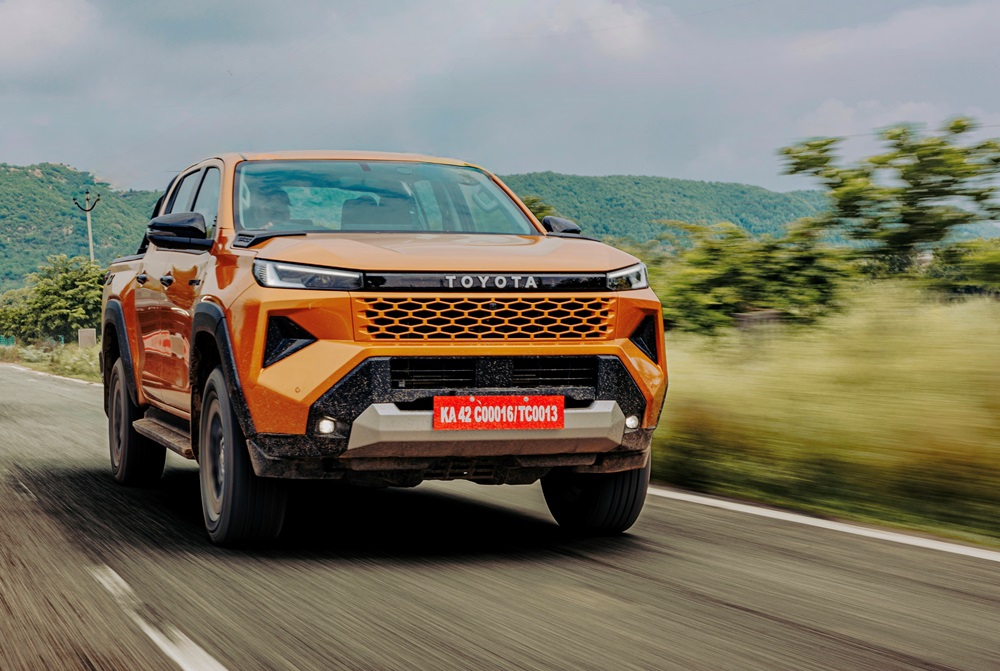
Since 2022, Toyota has been selling the Hilux in India and recently they launched the new 9th generation version priced from ₹31.99 lakh to ₹36.69 lakh (ex-showroom). The biggest changes are in the looks and styling, and also interior. Under the skin the significant changes are that – A) Now the Hilux only comes with a 6-speed auto. B) A 4X2 version too. C) Suspension is softer and it D) Rides on 17 inch wheels and tyres, instead of the earlier 18 inchers. But what will disappoint some, is that in interest of reigning in price, Toyota has done away with few features and the new Hilux does not come with things like automatic climate control, rear /c vents, powered driver’s seat, premium upholstery with leather or leatherette, and even auto dimming inside rear view mirror! And though the 9th generation Hilux is available in some international markets with electric power steering, in India, we continue to get the hydraulically assisted one. But more about this later.
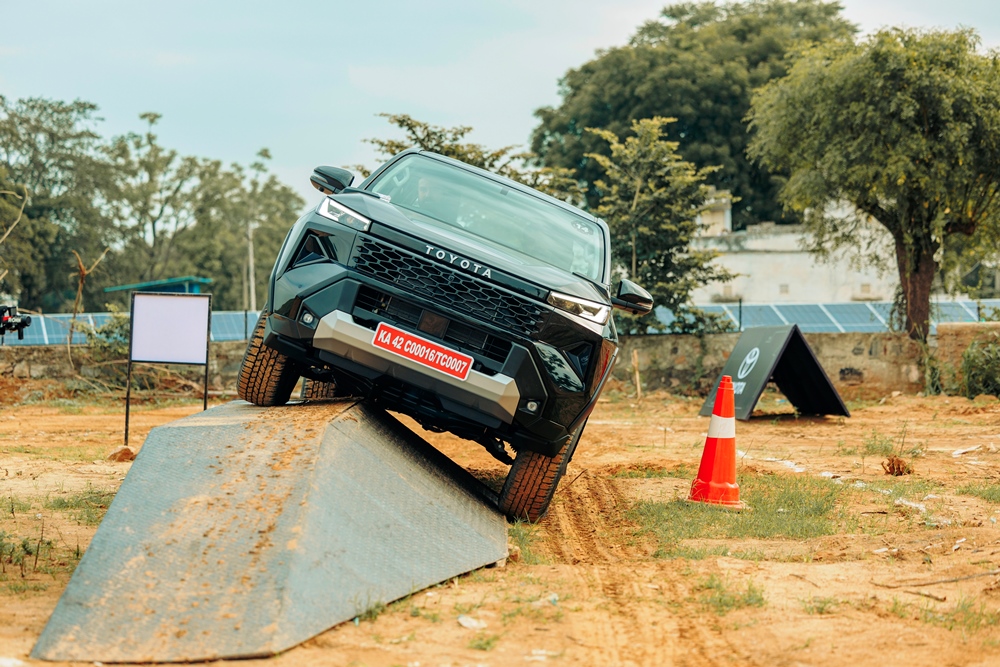
Now let’s talk of the styling. Toyota says that the front end stance and proportions are inspired by the “Cyber Sumo” design theme, where the shapes of the grille, bumper, and fender flares, and so on, mimic the “powerful, low-slung yet stable and grounded stance of Japanese sumo wrestlers during an initial charge”. Sounds good for sure. But in my view, the results are well, not so appealing. Here is why. Yes, given its size, stance and height and what can be termed as arresting looks, the new Toyota Hilux has loads of street presence that will still make most other road users give way. But in my opinion, the earlier chrome heavy one exuded more strength and brawn, while the new one is largely about sleek and sharp looks. It’s almost like now it’s dressed to go to a nice club, and has shed its earlier “Ready for the Bush” attire, which I prefer.
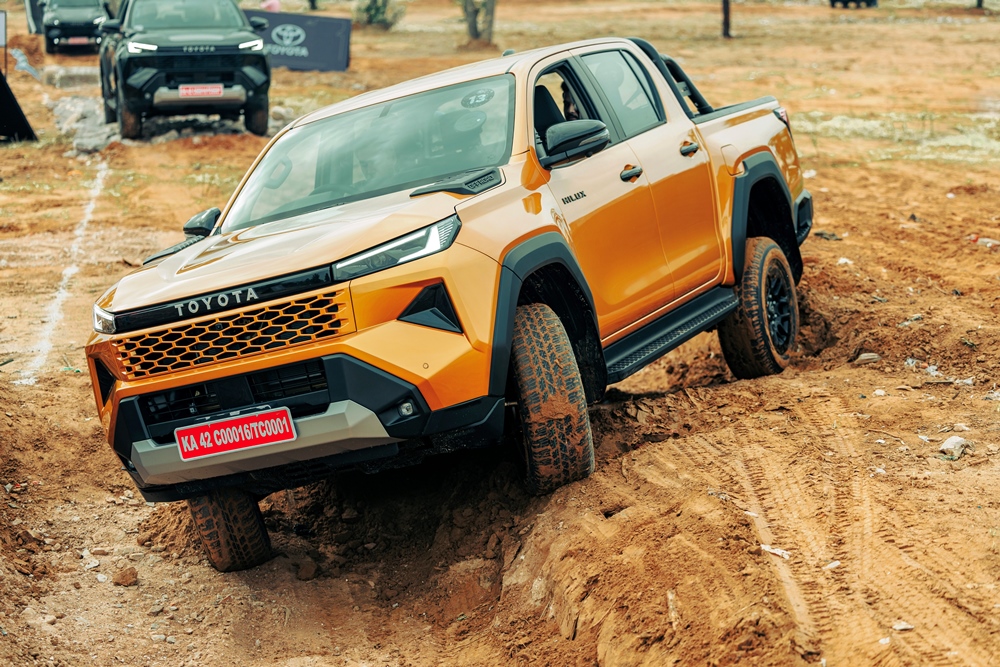
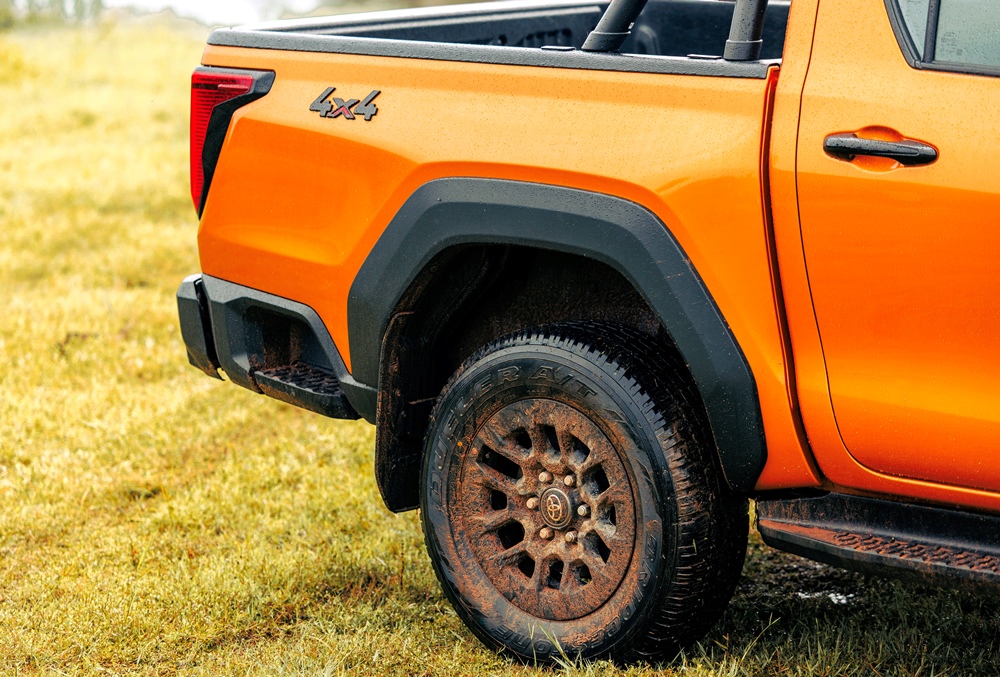
However, looks and styling are largely dependent on personal preferences, and I am sure that there are enough people who will prefer the upright “Cyber Sumo” theme and the flattish grille with honeycomb design. The hefty front bumper makes the new Hilux look a bit wider and also lower, which it actually is. Yes, the earlier Hilux had an unladen ground clearance of 279 mm, while on the new one it can vary between 216 mm and 220 mm, depending on the variant. The fact that the Hilux now comes with 17 inch wheels, has also contributed to this reduction in ground clearance. The smaller wheels have also led to more petite fender flares, and this is in keeping with the sleeker design theme too.
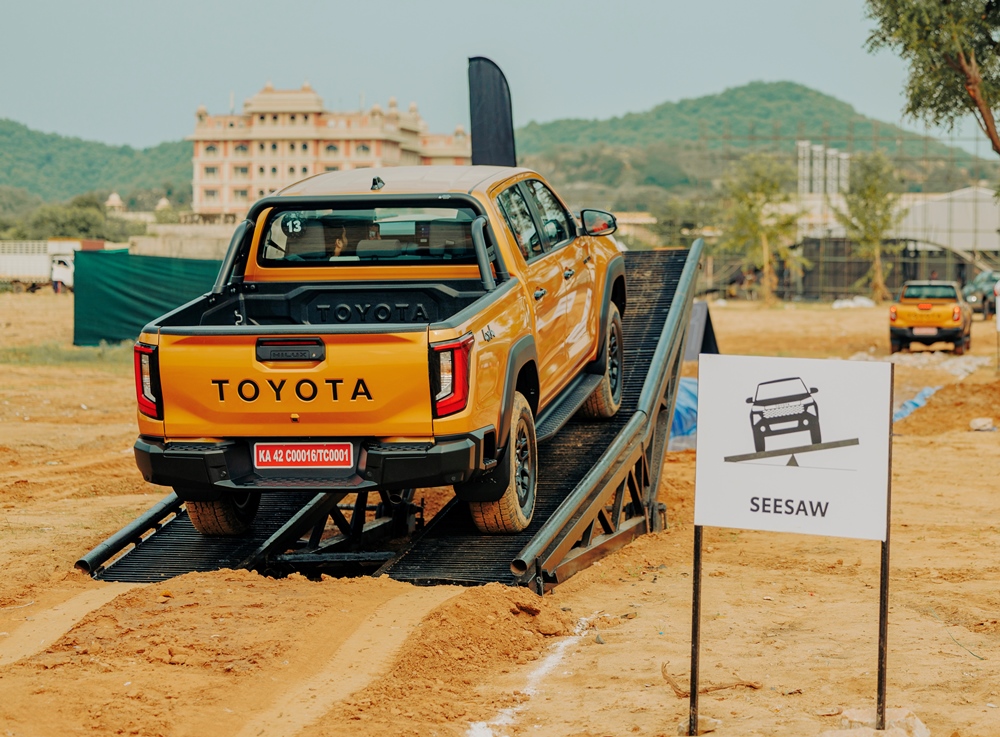
The rear bumper has a nice built in footstep that is much required due to the substantial height of the loading area. The rear end has also been redesigned and now has the classical style heritage look with Toyota embossed in large letters on the tailgate. But Toyota is also stamped inside the pickup’s bed and prominently adorns the thin glossy black panel connecting the extremely slim headlights too! Personally I feel, a renowned and globally respected brand like Toyota, should not have the need to showcase its name so noticeably. The classical heritage one at the back is a great touch, but maybe just putting the logo on the front would have been better.
Although I did not have the opportunity to drive the new Toyota Hilux in the dark and test the effectiveness of its headlights, I have a suspicion that the lighting may be a bit compromised (especially on forest trails that the Hilux is born for) due to the small size of the reflectors. And lighting in a vehicle like the Toyota Hilux, which is meant to allow one to enjoy life beyond paved roads, is extremely crucial in my view. To make matters worse, the fog lights are tiny too and I am still one of those old fashioned ones who subscribes to the theory that – “Reflector Size and Diameter, Contribute to Beam Intensity and Range”.
The new Toyota Hilux is built on the same ladder frame platform as its predecessor, but I believe both the frame and body have been further reinforced to increase rigidity and torsional strength, which is so important on tough off-road trails. The leaf spring suspension with rigid axle at the rear, has been reworked to soften ride with the smaller 17 inch wheels also contributing to better ride comfort. But given the basic load carrying design of the suspension, the ride is never going to be like that of a SUV with independent rear suspension, and the occupants , particularly those in the back will have to bear with the bouncy ride and jiggles and wiggles that the typical suspension setup of a pickup like the Hilux, is prone to.
Under the bonnet, rests the same and familiar 2.8 litre diesel engine that produces 204 horses and 500 Nm of torque. This is a powerful and smooth and willing engine, which is a great performer, both on and off the road. Though the engine gets a bit vocal at the higher end of its rev range, refinement levels are excellent with hardly any vibrations making their way into the passenger compartment, and this is apparently because the engine and gearbox mounts have been improved as has cabin insulation. This proven engine now only comes mated to a 6-speed automatic transmission, but fortunately, this is a quick shifting one eager to respond to driver inputs. Especially in sport mode. Yes you have the option to select modes like Eco, Normal and Sport to change the behaviour of the engine and transmission.
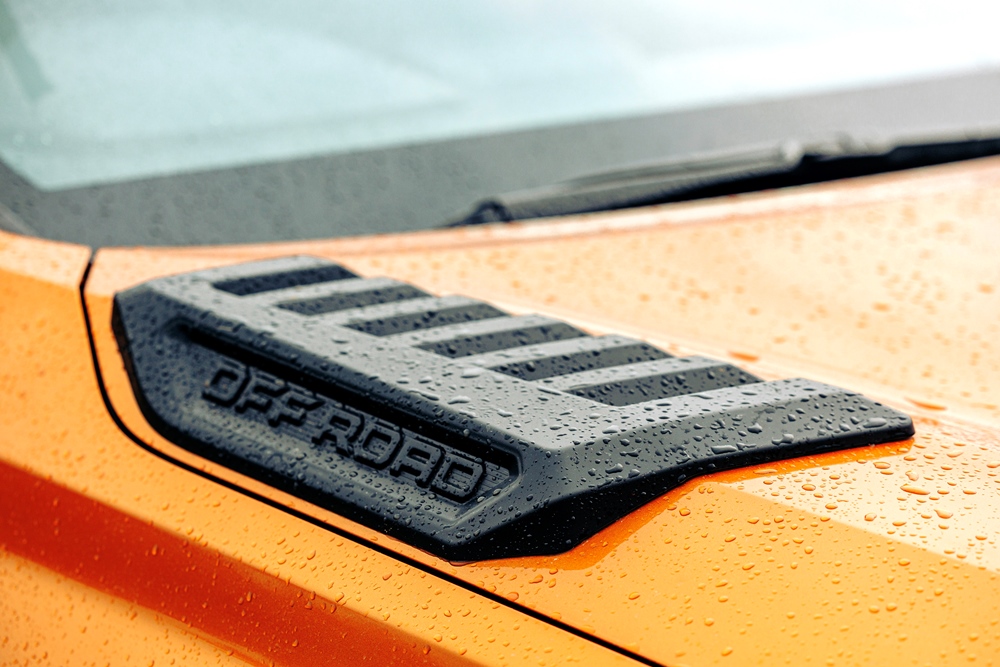
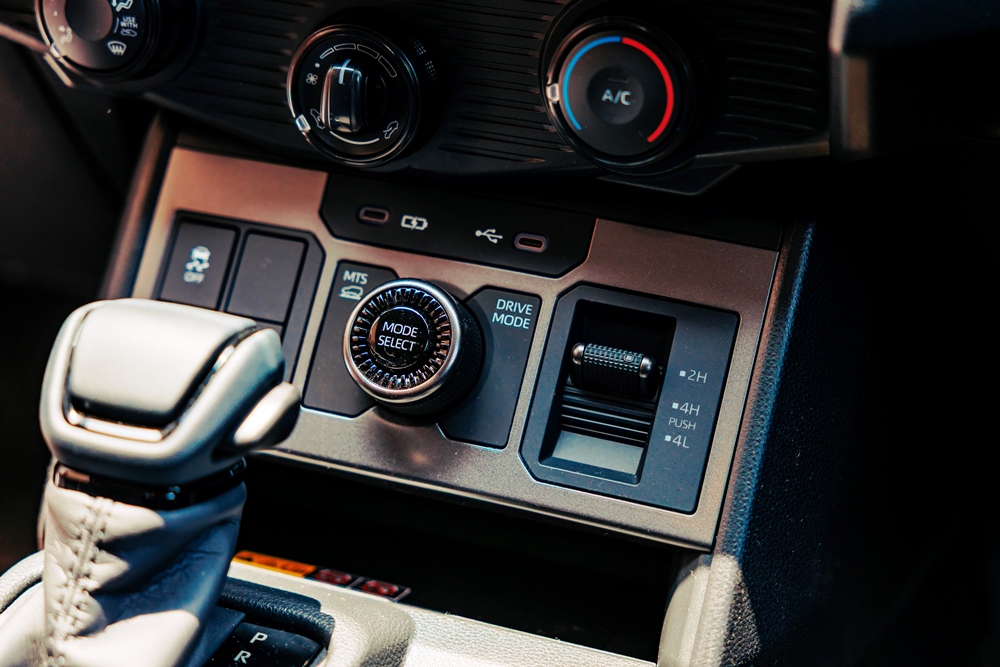
The 4X4 (four-wheel drive) variant also has high and low range options, along with differential lock, etc. But the 4X2 (two-wheel drive) one does not even have features like downhill assist control or the multi-terrain select traction control system, which could have proved to be useful. Honestly, I am not in favour of serious off-road machines like the Toyota Hilux being sold without 4X4. It’s almost like going to a shooting range with a gun, but no ammunition! “You may look the part, but cannot play the role”!
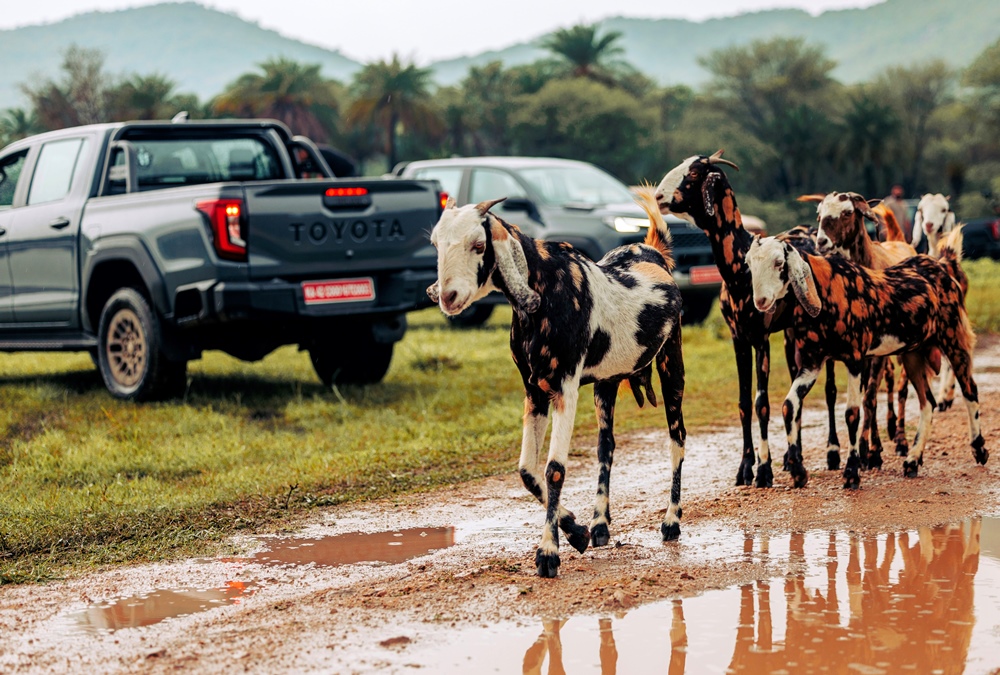
Obviously Toyota has introduced the 4X2 Hilux for those urban buyers who will never ever even feel the need, or know the importance or use of 4WD. Most of these people want to be seen in an imposing and strong looking pickup like the Toyota Hilux, simply because of the lifestyle connotations of adventure and fun associated with it. But in reality, all that these “Urban Dudes or Heroes” will get dirty, is the inside cuffs of their fancy pants, because the running boards cum footsteps of the elevated stance Hilux, have a habit of leaving their mark when you get out.
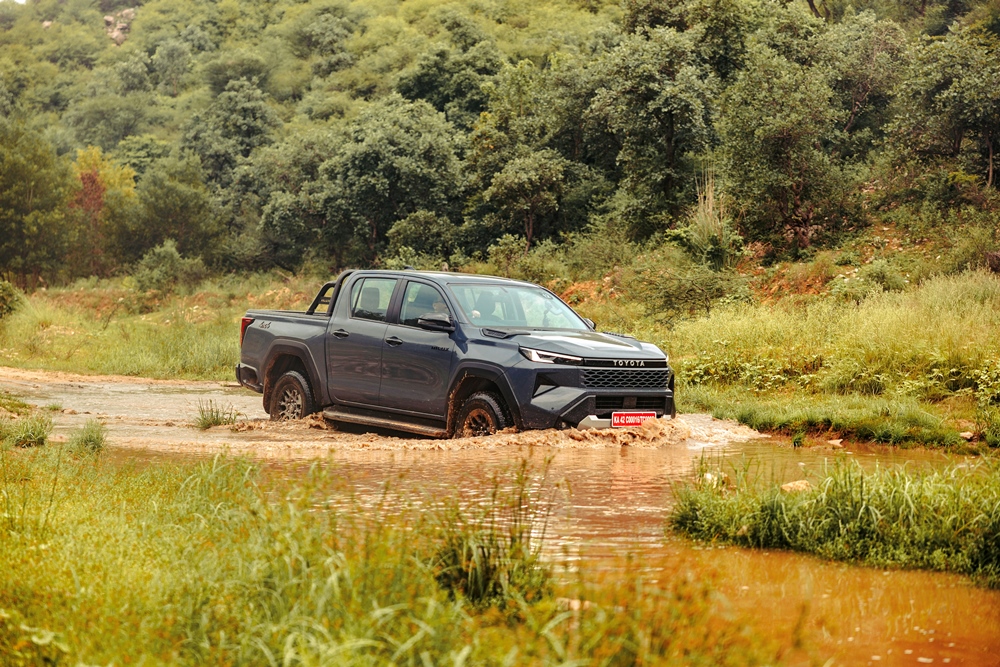
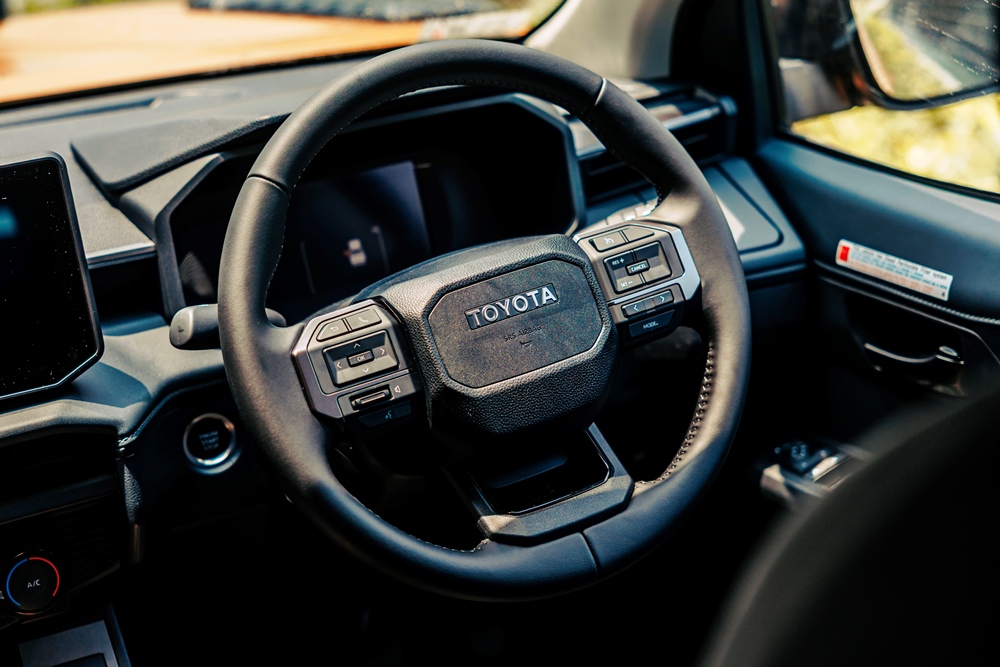
And talking of the high stance leads me to tell you that the view of the road from the driver’s seat is excellent and the seats themselves are very well shaped and hold you nicely. Like the exterior, the interior has been redone and is slightly more luxurious now, but it’s still not in the luxury SUV category.

When you put the show on the road the large and heavy (almost 2 tons) Hilux is no nimble athlete. It holds the ground well, but takes its own time in turning and makes you aware that it’s a big vehicle you are steering. And while Toyota is selling its 9th generation Hilux with electronically assisted power steering in some international markets, in India, we are still getting the hydraulic one carried forward from the predecessor. This again is obviously in interest of costs, but I think it’s a mistake, because the electronic steering would have made low speed maneuvering and parking so much easier, especially for those “Urban Heroes’ who will in all likelihood find its large turning circle and big size, a handful to manage in our crowded cities.
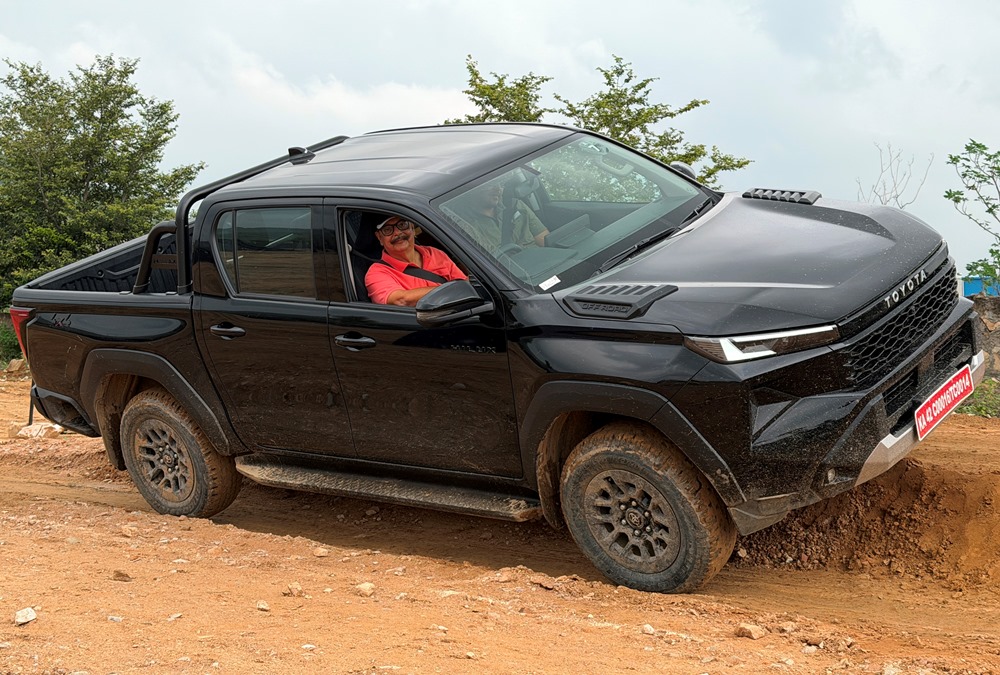
And here is where in my opinion the dichotomy lies. The Toyota Hilux is made for “Enjoying the Outdoor Life” and is an ideal companion for “Exploration Drives” in varied and tough terrains like mountains, forests, deserts and all such areas away from large urban cities. It’s ideal for overlanders, and those into activities like bicycling, trekking, fishing, kayaking, star gazing, photography and going for barbecues and so on. But, in India, the majority of buyers are urbanites whose closest encounter with “Outdoor Life” is driving up the track leading to their farmhouse, or sitting by the pool in their fancy club. These people are not interested in a vehicle like the Toyota Hilux for what it can do. But for what impressions it can create for them.
So will many people buy it, not really. I don’t think even Toyota expects high sales numbers. With the 4X2 version now on offer, more urbanites will surely opt for it. But the limiting factor for them could be its size and requirement of a large parking space. Those who know exactly how and where to best use the Toyota Hilux, will surely go for it. But these people who will actually spend a lot more time in it, would have preferred a more luxurious interior with far more creature comforts. And of course the mechanical upgrades, like electronic power steering. But that would raise the price. So this is a dilemma for Toyota – which category of customers does it target and cater to? In my opinion, Toyota should think of going the complete luxury way, with all possible features. Because those that want it and appreciate the Hilux, will pay for all the goodies. And yes only 4X4 for them.
Bob Rupani is a born car lover and avid automobile enthusiast who has spent some of the best times of his life behind the steering wheel.